

- ABSTRACT:
- 1. INTRODUCTION
- 2. METHODS
- 3. RESULTS
- 3.1. Study Selection
- 3.2. Study Characteristics
- 3.3. Risk of Bias in Studies
- 3.4. Results of Syntheses
- 3.5. Route and Dose Pattern as the Key Explanatory Axis
- 3.6. Translational Interpretation: No Demonstrated Inhibition, Possible Inhibition, and Preclinical Bacterial Protection
- 3.7. Antibody Kinetics and Temporal Dynamics of Immune Responses
- 3.8. Conceptual Integration Frameworks
- 4. DISCUSSION
- 4.1. Immunogenicity of Bacteriophage Therapy: A Layered Immune Response
- 4.2. Neutralising Antibodies and Therapeutic Inhibition: Conditional Rather Than Universal Effects
- 4.3. Clinical Significance Remains Uncertain
- 4.4. Confounding and Interpretation
- 4.5. Strengths of the Review
- 4.6. Limitations of the Review
- 4.7. Implications for Future Research
- CONCLUSION
- LIST OF ABBREVIATIONS
- AUTHOR'S CONTRIBUTION
- CONSENT FOR PUBLICATION
- REPORTING GUIDELINES
- AVAILABILITY OF DATA AND MATERIALS
- FUNDING
- CONFLICT OF INTEREST
- ACKNOWLEDGEMENTS
- DECLARATION OF AI
- APPENDIX A: DATABASE SEARCH SCREENSHOTS
- REFERENCES
Article ID: PD2601205005
Views: 21Immunogenicity and Neutralising Antibody Responses to Bacteriophage Exposure in Therapeutic and Experimental Settings: A Systematic Review and Evidence Map
 PDF
⬇ Downloads: 2
1Department of Microbiology and Immunology, National Research Centre, Dokki-12622, Egypt
Revised: 20 July, 2026
ABSTRACT:
Introduction: Bacteriophage therapy is being reconsidered as a potential option for multidrug-resistant bacterial infections, but the scale and clinical significance of host immune responses, particularly neutralising antibodies, remain uncertain.
Methods: PubMed, Scopus, and Web of Science were searched on January 12, 2026 for peer-reviewed primary studies published from 2015 through 2025. Fourteen studies met the eligibility criteria. Outcomes were synthesised descriptively across innate signalling, antiphage IgM, IgG, and IgA, functional neutralisation, pharmacokinetic clearance, and antibacterial or clinical outcome linkage.
Results: Functional neutralisation was reported in nine of 14 studies, whereas evidence directly linking immune findings to antibacterial outcomes was less frequent and heterogeneous. Repeated systemic or parenteral exposure sometimes coincided with strong neutralisation, but route-dependent patterns remained preliminary because phages, doses, host systems, purification procedures, infection states, and assays differed substantially. Human evidence consisted of one small phase 1 trial and observational, compassionate-use, or case-based studies. Protection against bacterial rechallenge in mice was interpreted as host protection associated with prior infection and phage-mediated bacterial lysis rather than proof of phage-specific protective immune memory.
Conclusion: Bacteriophage exposure can be immunogenic, but current evidence does not establish a consistent causal effect of antiphage immunity on clinical efficacy. Prospective studies should standardise measurement of antibodies, functional neutralisation, pharmacokinetics, and antibacterial outcomes.
Keywords: Bacteriophage exposure, phage therapy, immunogenicity, neutralising antibodies, antiphage immunity, antimicrobial resistance, systematic review.
1. INTRODUCTION
1.1. Rationale
Bacteriophage therapy has regained interest as an adjunct or alternative therapy to treat hard-to-treat bacterial infections, especially in the face of Antimicrobial Resistance (AMR) [1]. AMR inhibits the activity of known antibacterial therapies and has made pathogen-specific methods more interesting [2]. Bacteriophages selectively infect bacterial hosts and thus have been explored in experimental, compassionate-use, and clinical trials, such as infections by multidrug-resistant organisms [3]. Clinical evidence is, however, still heterogeneous, and the antibacterial activity cannot be translated into therapeutic performance. One of the key translational problems is the host recognition of bacteriophages. Phage particles and their structural elements have the potential to cause innate and adaptive immunity, such as antiphage antibodies [4, 5]. It does not always happen that antibody binding neutralises phage activity, but functional neutralisation must show that serum or some other biological sample suppresses phage infectivity in a suitable test. Repeated exposure has the potential to enhance the likelihood of a measurable humoral response, yet the size and the effects of such a response depend on the characteristics of the phage, dose, route, host, and assay procedures. Non-phage-specific mechanisms can also lead to immune effects. Measurement of cytokine or gene-expression changes may be due to infection, bacterial lysis, release of antigens, endotoxin contamination, and the endotoxin inflammatory status of the host [6]. The practical phage-therapy application also differs in its formulation, dosing, and delivery context, which may change host exposure and make interpretation difficult [7]. The communication between bacteriophages, bacteria, and mammalian immunity offers another foundation for distinguishing between phage-specific and infection-related immune responses [8]. Correspondingly, increased elimination of viable phage by blood is a pharmacokinetic effect, not necessarily in itself evidence of neutralising-antibody effect. Human exposure models have also indicated that quantifiable changes in inflammatory or microbiome responses can be constrained regardless of the oral administration of phages [9]. Such differences are required during the interpretation of whether an immune signal is a recognition signal, functional neutralisation signal, altered clearance signal, or a clinically meaningful change in antibacterial outcome. Immunogenicity of bacteriophages and interactions between phages and the mammalian immune system have been reviewed previously [5, 6, 8]. The value of the present review is not thus a pretence to be the first review of this subject. Its particular contribution is a structured evidence map which disentangles immune recognition, antibody development, functional neutralisation, pharmacokinetic clearance and antibacterial or clinical outcomes in human, animal and mechanistic study designs. The purpose of this structure is to avoid the interpretation of mechanistic observations as necessarily being the result of therapeutic inhibition. The objective of the review was to summarise evidence on host immune responses to therapeutic and experimental exposure to bacteriophages, and specifically of antiphage antibodies and functional neutralisation. Therapeutic intent was not obligatory since appropriate mechanistic, immunisation, toxicity, and healthy-volunteer studies would be informative on the biological pathways that would be used in phage use. This review uses immunogenicity to describe the ability to induce a quantifiable immune response; immune activation to measure detectable or viable phage in a neutralisation assay; functional neutralisation to quantify loss of phage infectivity in a neutralisation assay; pharmacokinetic clearance to quantify disappearance of detectable or viable phage in a biological compartment; and antibacterial or clinical outcome to quantify infection-related effects. The immunity following bacterial rechallenge is distinct and is not considered to be similar to phage-specific immune memory. The PEO framework was used to formulate the research question (Table 1).| Factor | Description |
| P (Population) | Humans, animals, or in vitro immune/host systems exposed to bacteriophages therapeutically or experimentally, including infected and non-infected settings and mixed-design studies. |
| E (Exposure) | Whole-phage administration or exposure by any route and dosing pattern; purified phages, phage cocktails, or defined phage DNA/structural components when used to investigate host immune recognition relevant to bacteriophage exposure. |
| O (Outcome) | Innate signalling or cytokines; antiphage IgM, IgG, or IgA; functional neutralisation; pharmacokinetic persistence/clearance; and any reported linkage with antibacterial or clinical outcomes. |
1.2. Research Question
Across human, animal, and in vitro or mechanistic models, how does therapeutic or experimental bacteriophage exposure, including route and dosing pattern, shape innate and adaptive immune responses, and what evidence links these responses to functional neutralisation, phage clearance, or antibacterial outcomes?2. METHODS
Primary evidence pertinent to bacteriophage immunogenicity was identified, appraised and synthesised using a systematic review design [10]. The synthesis was based on prespecified immune and functional outcome domains, as the review incorporated heterogeneous human, animal and mechanistic evidence and not a single pooled endpoint. The protocol itself was not prospectively registered, but the eligibility criteria and screening procedure, as well as the key outcome domains, were specified prior to formal screening.2.1. Information Sources
PubMed, Scopus, and Web of Science were searched on January 12, 2026. Eligible publication dates were January 1, 2015 through December 31, 2025. Records published after December 31, 2025 were excluded even though the searches were conducted in January 2026. For early-online articles, eligibility was determined by the first online publication date. The 2015 start date was prespecified because the review was designed to synthesise contemporary evidence reflecting the recent resurgence of therapeutic bacteriophage research and the wider use of modern immunological assays. Database screenshots are reproduced in Appendix A, and the complete database-specific search strategies, restrictions, exact search date, and retrieved record counts are provided in Appendix B.2.2. Eligibility Criteria
Eligibility criteria were applied consistently across therapeutic and experimental exposure studies [11]. Human clinical trials, observational and compassionate-use studies, animal infection models, animal immunisation or toxicity models, in vitro mechanistic studies, and mixed human-animal or animal-in vitro studies were eligible when they reported at least one prespecified immune, neutralisation, pharmacokinetic, or antibacterial-outcome domain (Table 2).| Domain | Inclusion Criteria | Exclusion Criteria |
| Population/host system | Human participants, including healthy volunteers and patients; animal infection models; animal immunisation, repeated-exposure, or toxicity models; in vitro immune/host-cell systems; and mixed-design studies. | Studies without a mammalian/vertebrate host or relevant immune/host-cell system; purely bacterial phage-host studies without host immune outcomes. |
| Exposure | Therapeutic or experimental exposure to whole bacteriophages, single phages or cocktails, and defined phage DNA or structural components when used to investigate host immune recognition relevant to bacteriophage exposure. Therapeutic intent was not mandatory. | Studies of unrelated viral vectors, phage-display constructs, or engineered systems when host immunogenicity of bacteriophage exposure was not the research focus. |
| Comparator | There was no need for a comparator. Placebo/control groups, baseline-versus-post-exposure comparisons, between-route comparisons, or descriptive longitudinal designs could be used to conduct eligible studies. | A comparator was not a precondition to include studies. |
| Outcomes | Innate signalling/cytokines; antiphage IgM, IgG, or IgA; functional neutralisation; phage persistence or pharmacokinetic clearance; and antibacterial/clinical outcome linkage. | Studies reporting antibacterial efficacy alone without an eligible immune, neutralisation, or pharmacokinetic outcome. |
| Study design/publication | Peer-reviewed primary research published from 2015 through 2025, including clinical trials, observational or compassionate-use studies, animal experiments, in vitro mechanistic work, and mixed designs. | Reviews, editorials, books/book chapters, conference abstracts, protocols, non-primary reports, and studies published before 2015 or after 2025. |
2.3. Search Strategy
Search strategy included: bacteriophage, immune/ immunogenicity, antibody/neutralisation, and antimicrobial resistance in PubMed and Web of Science. The database strings are reported as they are run and not retrospectively expanded once the study has been selected. Scopus and Web of Science employed relatively limited fielded/topic strategies, and PubMed also had Humans and AMR restrictions; these options might have made them less sensitive to search and thus have been considered methodological limitations. The AMR block was predefined to have a translational focus on hard-to-treat and drug-resistant bacterial infections, which is the main modern environment in which phage therapy is being engineered. Focused retrieval was done with AMR instead of as a post-search eligibility criterion; studies that were included did not have to involve a resistant pathogen. Due to the prespecified search framework, this was not retrospectively expanded after screening, and the same 14-study evidence set was maintained. This choice maintains the predetermined evidence base but fails to rule out the chance that other pertinent literature beyond the AMR-targeted or human-indexed PubMed coverage was overlooked. The need to use AMR terminology can still have decreased sensitivity in the context of other relevant immunogenicity research that does not involve this requirement, and is recognized as a possible cause of selection bias. Appendix B lists parentheses, Boolean operators, field tags, controlled vocabulary, phrase searching, truncation, date and language restrictions, exact search date, and record counts. Precise database terminologies are maintained, such as American spelling, as necessitated by database indexing. There was no formal review registration done. The pre-established eligibility criteria, outcome definitions, and the phased screening process were followed throughout the entire screening and applied to the 14 studies included.2.4. Screening and Selection Process
Two reviewers independently sifted titles and abstracts against the eligibility criteria after duplicate removal, and then conducted independent full-text review [12]. Conflicts were settled through discussion, and in cases where necessary, a third reviewer was consulted. Searching for potentially eligible reports was done by database-linked full-text access, DOI or publisher pages, and open-access repositories; additional title and author searches were made to find alternative full-text versions where they existed. Of 52 reports requested to be retrieved, seven were the ones that could not be evaluated, as the full-text versions were not available under these routes and the information on titles and abstracts was not sufficient to make a reliable judgment of eligibility. These records were left in the PRISMA accounting as reports that could not be retrieved and were not considered full-text exclusions. Appendix C gives the screening counts and the leading causes of exclusion. The database-level counts and primary exclusion categories have been archived in the screening record, but not a full article-level bibliographic linkage of all 31 full-text exclusions or the seven unretrieved reports. Retrospective identity reconstruction of individual articles was thus not pursued. This limitation has been reported in Appendix C and the limitations.2.5. Data Extraction Procedure
A standardised extraction framework was used to record the study design; host species or participant group; infection and immune status; phage type or cocktail; dose; route; dosing frequency and duration; purification information and reported endotoxin level; baseline antiphage antibodies; antibody assay; functional neutralisation assay; pharmacokinetic or clearance measurement; and antibacterial or clinical outcome. The data were extracted or cross-tabulated by two reviewers, and disagreements were resolved by consensus. Any information that was not mentioned in the original article was not estimated as lacking but reported as not reported. The extended extraction matrix is given in Appendix D.2.6. Risk of Bias Assessment
Design-appropriate tools were used to determine the risk of bias. Chen et al. used the Cochrane Risk of Bias 2 (RoB 2) framework to evaluate the randomised phase 1 trial [13]. Appropriate criteria in JBI design-specific criteria were nonrandomised human evidence, with cohort/observational, case-report or case-series, and analytical pre-post considerations. SYRCLE domains were used to evaluate the animal components. The assessment of mechanistic in vitro components was performed using an adapted OHAT framework that encompasses the definition of experimental conditions, exposure characterisation, control conditions, outcome assessment, incomplete data, selective reporting, among other possible sources of bias. Mixed-design studies were not coerced to be classified as a single-study type but were instead appraised as components. Domain-level decision rules and judgements are presented in Appendix E. The lack of meta-analysis was due to the fact that study designs, host systems, phage formulations, routes, dosing schedules, assays, and outcome definitions were not comparable enough. Results were causally synthesised. In the case of the evidence map, a study was included in a single outcome domain where it reported at least one outcome, and mixed studies had the potential to be included in more than one evidence-context column when different human, animal, or mechanistic components were evaluated to measure that outcome. So, study-component entries are context-specific cell counts. Counts reflect the availability of evidence, not the magnitude of effects, direction, quality, or clinical importance. The review involved a mixture of different study designs and other results that were largely descriptive to the extent that a formal GRADE certainty-of-evidence assessment was not conducted. No official certainty labels like low/very low were, therefore, given. Qualitative discussion of confidence in the synthesis is performed, and risk of bias, imprecision, indirectness, heterogeneity, and generalisability are considered separately. Despite the absence of a formal GRADE assessment, qualitative confidence varies based on outcome. The reliability of direct laboratory measurements, such as ELISA, functional neutralisation tests, and viable-phage titres, is moderate in both single studies with reservations of risk of bias and imprecision. There is moderate confidence that repeated parenteral or systemic exposure can cause functional neutralisation but low confidence in humans. It is extremely doubtful that any clinically significant treatment failure is due to antiphage immunity, due to the paucity of human data, which are of observational nature, confounded, and rarely prospectively linked to antibacterial effects. The belief in route-specific effects is extremely weak due to the heterogeneity in the phage, dose, host, infection status, and assays. Bacterial rechallenge protection must be considered low-confidence evidence of phage-specific protective immunity.3. RESULTS
3.1. Study Selection
The PRISMA 2020 flow structure was used to select the studies. On January 12, 2026, searches were conducted in Scopus, PubMed, and Web of Science, and only articles published from 2015 to 2025 were included (Fig. 1). A total of 430 records were found by the database searches: Scopus (n = 168), PubMed (n = 163), and Web of Science (n = 99). Of the 374 records, after the elimination of 56 duplicates, title and abstract screening was done. At this point, a total of 322 records were filtered out: 114 due to an irrelevant topic, 50 due to the absence of any eligible immune or neutralisation outcome, and 158 due to the publication type not being eligible. A total of 52 reports were requested to be fully-text retrieved; seven of them were not available in full-text, and 45 reports were eligible to be assessed. Thirty-one full-text reports were excluded, with each assigned one major reason: no eligible immunological or neutralisation endpoint (n = 6); no eligible bacteriophage exposure or intervention (n = 9); inadequate methodological or outcome data to determine eligibility (n = 8); and secondary research, protocol, or non-primary publication (n = 8). Therefore, 45 reports were eligible, and 31 full-text exclusions resulted in 14 included studies (Table 3).| Study | Aim | Design / Classification | Sample / Host System | Phage Exposure / Intervention | Principal Findings Relevant to This Review |
| Chen et al. (2024) [13] | Evaluate safety, tolerability, and immunological effects of oral ShigActive™ exposure. | Human experimental exposure: phase 1 randomised, double-blind, placebo-controlled trial in healthy adults; inflammatory mediator and microbiome monitoring. | 10 healthy adults (8 ShigActive™, 2 placebo) | Oral five-phage Shigella cocktail, 1 × 10¹⁰ PFU/dose, three times daily for 7 days. | No serious or medically attended adverse events were reported. Gastrointestinal inflammatory mediators and faecal microbiome composition did not differ significantly from placebo or baseline; the study did not test functional antiphage neutralisation. |
| Dedrick et al. (2023) [14] | Evaluate clinical, microbiological, and immune outcomes of compassionate-use phage therapy for drug-resistant mycobacterial disease. | Human nonrandomised compassionate-use cohort; personalised phage selection; intravenous and/or aerosol delivery; clinical, microbiological, resistance, ELISA, and functional neutralisation monitoring. | 20 treated patients (from approximately 200 screened requests/isolates) | Personalised mycobacteriophages, usually 10⁹ PFU intravenously twice daily, with aerosol delivery in some patients; duration varied. | Favourable clinical or microbiological responses occurred in 11/20 patients. Serum neutralisation developed after intravenous exposure in 8 tested patients and was temporally compatible with reduced response in some cases, but it was not consistently associated with an unfavourable outcome. |
| Majewska et al. (2019) [15] | Characterise the kinetics of phage-specific antibodies after long-term oral exposure. | Animal non-infection repeated-exposure study; murine oral administration, withdrawal, and re-exposure; ELISA for IgM/IgG/IgA and measurement of viable phage passage/bioavailability. | Mice (N = 6-7 per group) | A3R or 676Z staphylococcal phages in drinking water, approximately 2 × 10¹⁰ PFU/mouse/day during exposure periods. | Phage-specific IgM, IgG, and IgA developed. Increased secretory IgA coincided with reduced recovery of viable phage from the gastrointestinal tract, and IgG-rich plasma showed in vitro neutralising activity. This study assessed phage bioavailability rather than antibacterial efficacy. |
| Kaźmierczak et al. (2021) [16] | Define antibody kinetics, immunogenic structural proteins, and neutralising activity of two therapeutic staphylococcal phages. | Mixed animal-human-in vitro study: murine immunisation, healthy-donor and phage-treated patient serology, neutralisation assays, structural-protein analysis, and macrophage-cell gene-expression experiments. | Mice (N = 6 in principal phage-immunisation groups), 55 healthy human donors, treated-patient sera, and a human macrophage cell line. | A3R and 676Z phages; murine intraperitoneal immunisation with 10¹⁰ PFU/dose on repeated occasions; human therapeutic exposure varied. | Mice developed IgM and IgG. Antibodies to ORF096 neutralised phage activity. Human baseline and treatment-related antibody patterns were variable, and tested capsid proteins did not produce a consistent treatment-related increase in patients. Macrophage gene-expression assays showed no major response to selected proteins. |
| Gangwar et al. (2022) [17] | Assessed acute/subacute toxicity and immunological markers after oral phage exposure. | Animal non-infection toxicity study in Charles Foster rats; single-dose and 28-day repeated oral exposure with haematological, biochemical, cytokine, and histopathological assessment. | Charles Foster rats | Oral bacteriophage cocktail targeting XDR Klebsiella pneumoniae; 1 mL at 10¹⁰ or 10¹⁵ PFU/mL. | No significant treatment-related differences were reported in the measured cytokines, haematology, biochemistry, or histopathology. These findings support tolerability within this specific preclinical exposure model but do not establish general clinical safety. |
| Peez et al. (2025) [18] | Compare safety, pharmacokinetics, neutralisation, and antibacterial outcomes after intravenous versus local phage delivery. | Animal study with healthy sheep and fracture-related infection phases; route comparison with serial viable-phage titres, serum neutralisation, and bacterial-load assessment. | 16 sheep across two phases | S. aureus phage ISP; 20 mL at 10⁹ PFU/mL, intravenous or local, three times daily for 10 days; repeated-course design in the healthy-sheep phase. | Viable phage declined rapidly in plasma after intravenous dosing. Serum neutralisation increased with repeated exposure and approached 99% in later measurements. Bacterial-load differences between treatment routes were not statistically significant; clearance and neutralisation were therefore reported as separate endpoints. |
| Berkson et al. (2024) [19] | Determine how phage-specific immunity affects repeated phage activity against vancomycin-resistant Enterococcus. | Animal study combining murine VRE gut-colonisation experiments with phage-only immune profiling; repeated five-phage exposure, ELISA, cytokine/flow-cytometry measures, neutralisation, clearance, and efficacy assessment. | Mice (typically n = 5 per group per experiment) | Five-phage cocktail targeting vancomycin-resistant Enterococcus; repeated courses. | Repeated exposure generated phage-specific IgM/IgG and functional neutralisation. In this model, antiphage immunity was associated with faster tissue clearance and reduced antibacterial performance on reuse for susceptible phage types. |
| Archana et al. (2021) [20] | Determine whether repeated parenteral phage dosing induces functional neutralising activity. | Animal non-infection immunisation study; weekly subcutaneous injections with serum plaque-reduction neutralisation testing. | 5 rabbits | Purified phages targeting E. coli, K. pneumoniae, P. aeruginosa, S. Typhi, and S. aureus; 10⁹ PFU weekly for 6 weeks. | Functional neutralisation generally became detectable after the third week and reached near-complete activity for several phages after repeated exposure. Baseline neutralising activity was reported only against the E. coli-targeting phage. |
| Xing et al. (2025) [21] | Assess host protection against bacterial rechallenge after successful phage treatment of primary infection. | Animal infection/rechallenge study in a murine bacteraemia model. | Mice across primary-infection and rechallenge cohorts | Lytic phage HP3 against extra-intestinal pathogenic E. coli. | Phage treatment rescued most mice from the primary lethal infection, and many survivors were protected against later bacterial rechallenge without additional phage. The finding is compatible with host antibacterial immune priming associated with infection and phage-mediated lysis; it does not demonstrate phage-specific protective immune memory. |
| Podlacha et al. (2024) [22] | Define innate immune pathways responding to bacteriophage DNA during phage exposure. | Mixed animal-in vitro mechanistic study: Salmonella-infected and non-infected chickens plus phage-DNA transfection of chicken lymphoblasts and mouse splenocytes. | 100 chickens (4 groups, n = 25 each) plus in vitro cell experiments | Oral vB_SenM-2 + vB_Sen-TO17 cocktail, 10⁹ PFU of each phage daily for 14 days. | Phage exposure increased IFN-β but not IFN-α or TNF-α in the reported model. Phage DNA activated TLR9/MyD88 signalling, with IRF7 phosphorylation and NF-κB dephosphorylation linked to IFN-β production. The cGAS-STING pathway was induced but interrupted at IRF3 phosphorylation because phage DNA did not efficiently generate the RNA polymerase III-dependent dsRNA signal required for downstream activation. |
| Bernabéu-Gimeno et al. (2024) [23] | Assess bacterial, phage-persistence, and immune outcomes after nebulised personalised phage therapy in cystic fibrosis. | Human compassionate-use case report/case series: three treatment episodes in two paediatric patients with longitudinal bacterial counts, viable-phage persistence, and serum neutralisation. | 2 paediatric patients (3 treatment episodes) | Nebulised personalised monophages against S. aureus and/or P. aeruginosa for 10 days with standard-of-care antibiotics. | Bacterial load decreased by 3-6 log10 CFU in two treatment episodes. Viable phage persisted in sputum for up to 33 days, and serum neutralising activity appeared 10-42 days after treatment. The small uncontrolled case-based design does not establish general efficacy or safety. |
| Hodyra-Stefaniak et al. (2020) [24] | Characterise natural and exposure-related antibodies to PB1-related phages and structural proteins. | Mixed animal-human study: murine immunisation plus serological analysis of healthy donors and phage-treated patients; ELISA and functional neutralisation assays. | Mice (N = 7 per group), 55 healthy human donors, and 11 F8-treated patients | PB1-related Pseudomonas phages LMA2, F8, and DP1; repeated intraperitoneal murine exposure; human oral and/or topical therapy. | All three phages induced IgM and IgG in mice. Human phage-specific antibodies and variable baseline neutralising activity were observed. Recombinant gp22/gp29 antibodies did not consistently neutralise phages, showing that antibody binding and functional neutralisation are distinct. |
| Kasprzak et al. (2025) [25] | Characterise pro- and anti-inflammatory gene-expression patterns during personalised phage therapy. | Human exploratory observational pre-post study; PBMC and granulocyte qPCR for 22 immune-related genes with clinical correlation analyses. | 10 patients (5 female, 5 male; age 21-79 years) | Personalised phage preparations were administered orally, topically, and/or by inhalation for 13-29 days according to infection site. | No uniform pre-versus-during treatment gene-expression pattern was observed. Older participants showed higher PBMC TLR4 fold change. Gene-expression changes were not consistently associated with clinical outcome. |
| Żaczek et al. (2016) [26] | Assessed antiphage antibody production, functional neutralisation, and relationship with treatment outcome. | Human observational study; pre/during-treatment ELISA for IgG, IgA, and IgM plus serum neutralisation testing and clinical-outcome comparison. | 20 treated patients plus 10 healthy donors | Oral and/or local MS-1 staphylococcal phage cocktail. | Most patients did not show a marked rise in all antiphage antibody measures. When antibodies or neutralising activity increased, they were not consistently associated with poorer clinical outcome, illustrating that humoral recognition does not necessarily imply therapeutic inhibition. |
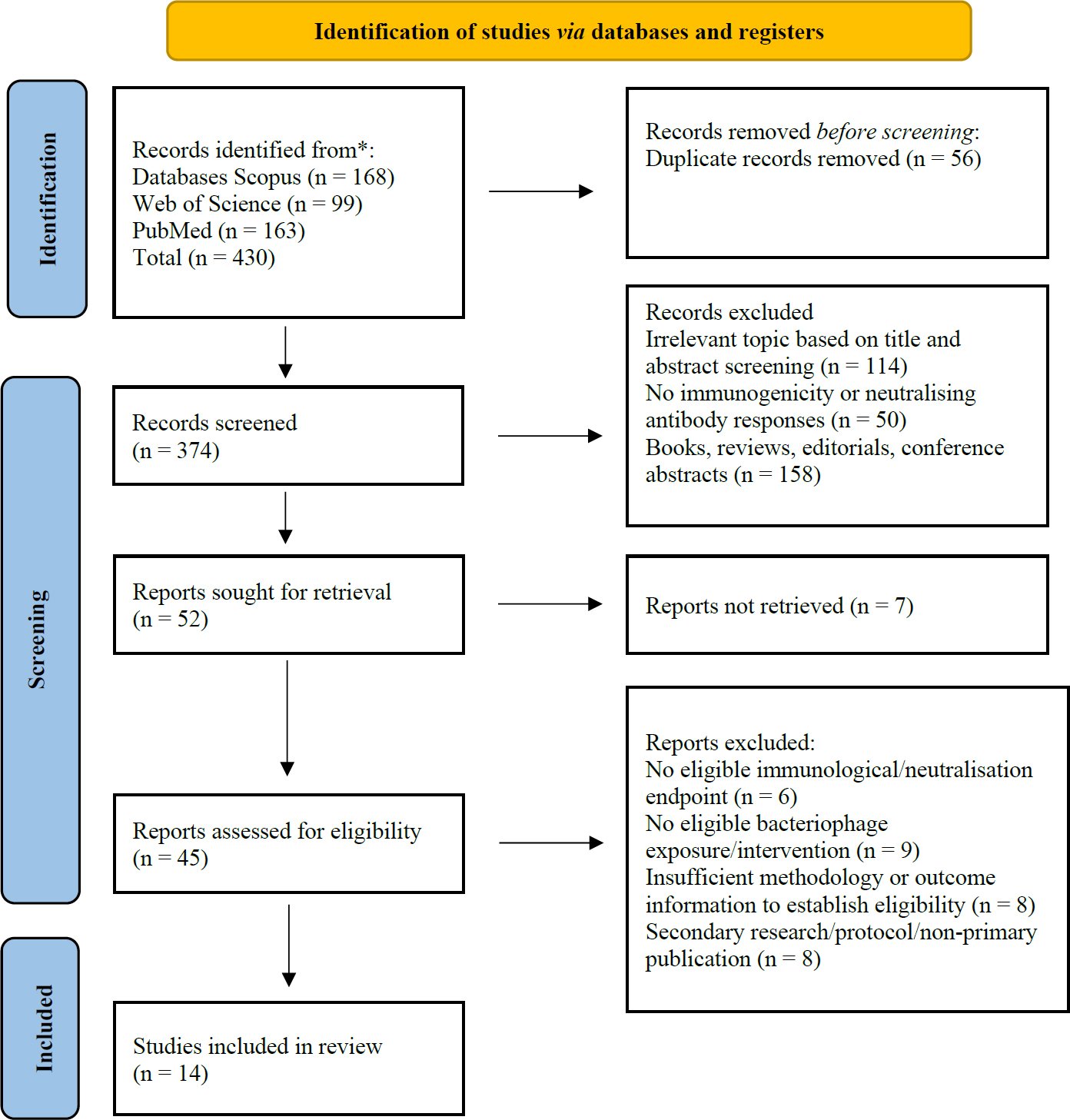
Fig. (1). PRISMA diagram.
3.2. Study Characteristics
3.2.1. Evidence Map of Immune Outcomes
The evidence map was constructed from the 14 included studies. Table 4 reports context-specific study-component entries and the number of unique studies reporting each outcome; Fig. (2) visualises the context-specific counts. A study could contribute to both human and animal columns when it contained genuinely mixed components, but it was counted only once in the unique-study denominator for each outcome. Unique-study totals were cross-checked against the study-by-outcome matrix in Appendix F.
Table 4. Evidence map by evidence context and outcome domain.
| Immune/Outcome Domain | Human Evidence | Animal Evidence | In vitro/Mechanistic Evidence | Unique Studies Reporting Outcome (n/14) |
| Innate signalling/cytokine assessment | 2 [13, 25] | 3 [17, 19, 22] | 2 [16, 22] | 6/14 [13, 16, 17, 19, 22, 25] |
| IgM antibody response | 1 [26] | 4 [15, 16, 19, 24] | 0 | 5/14 [15, 16, 19, 24, 26] |
| IgG antibody response | 4 [14, 16, 24, 26] | 4 [15, 16, 19, 24] | 0 | 6/14 [14–16, 19, 24, 26] |
| IgA antibody response | 2 [14, 26] | 1 [15] | 0 | 3/14 [14, 15, 26] |
| Functional neutralisation | 5 [14, 16, 23, 24, 26] | 6 [15, 16, 18–20, 24] | 0 | 9/14 [14–16, 18–20, 23, 24, 26] |
| Pharmacokinetics/persistence/clearance | 1 [23] | 3 [15, 18, 19] | 0 | 4/14 [15, 18, 19, 23] |
| Antibacterial/clinical outcome linkage | 4 [14, 23, 25, 26] | 3 [18, 19, 21] | 0 | 7/14 [14, 18, 19, 21, 23, 25, 26] |
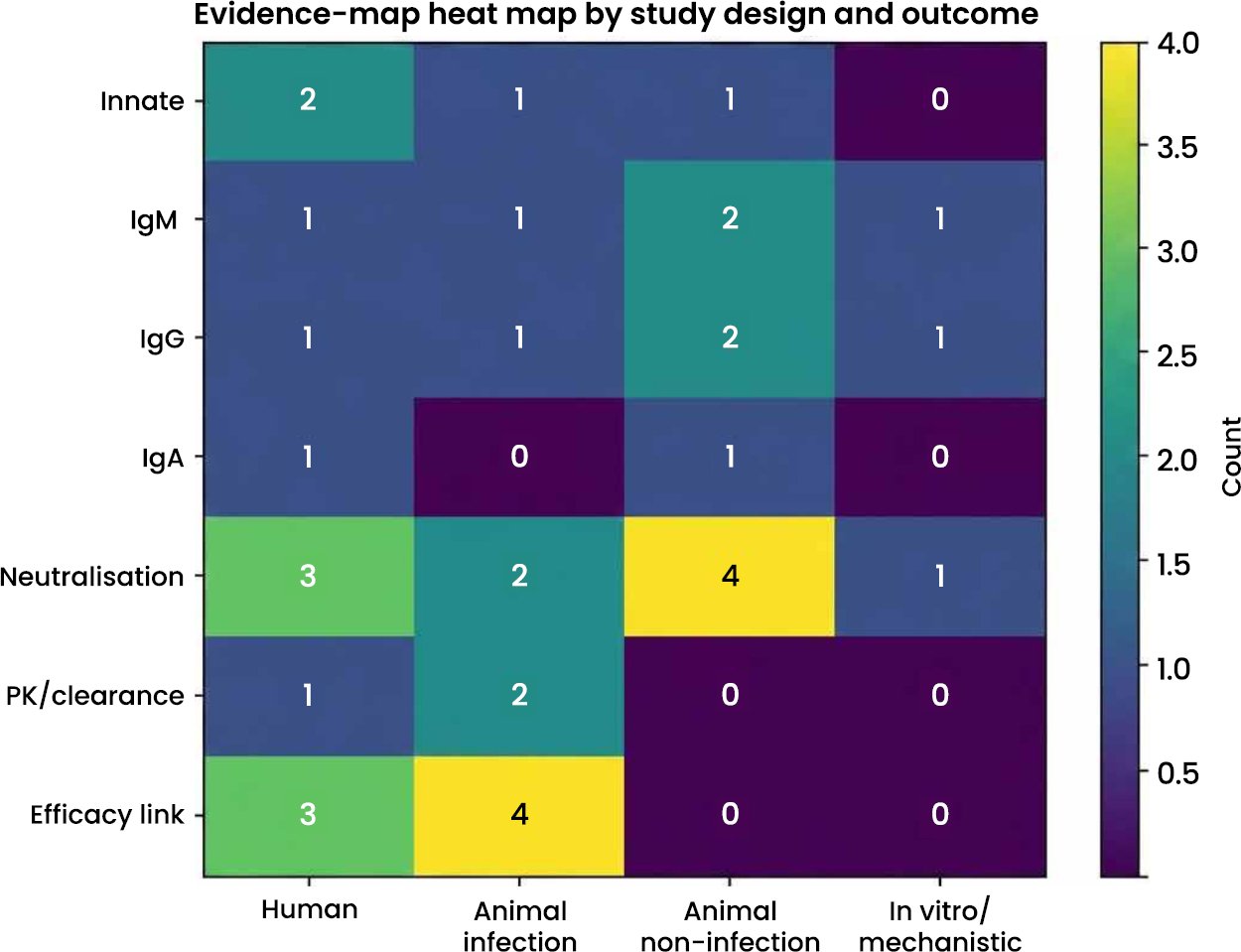
Fig. (2). Evidence-map counts by evidence context and immune/outcome domain. Cell values are study-component entries, not effect estimates. Counts do not indicate effect magnitude, direction, methodological quality, or clinical importance.
Across the 14 unique studies, functional neutralisation was reported in 9 studies, antibacterial or clinical outcome linkage in 7, innate signalling/cytokine outcomes in 6, IgG in 6, IgM in 5, pharmacokinetic persistence/clearance in 4, and IgA in 3. These unique-study totals are directly proportional to Appendix F and reflect the frequency of an outcome being assessed or reported; these totals do not reflect the direction of an increase or decrease or whether an effect was clinically meaningful or whether there was low risk of bias in the underlying evidence.
3.3. Risk of Bias in Studies
Risk-of-bias appraisal was conducted at study level and by study component for mixed designs (Appendix E). RoB 2 was used only for the randomised Chen trial [13]. JBI design-specific criteria were used for nonrandomised human evidence; SYRCLE domains were used for animal experiments; and adapted OHAT domains were applied to in vitro mechanistic components. The symbols used in domain tables are defined as L = low risk, H = high risk, and U = unclear risk because the relevant method was not adequately reported.
The trial by Chen et al. [13] was judged to have low risk of bias for the principal phase 1 outcomes because the trial used a documented randomisation sequence, indistinguishable placebo, double blinding, and prespecified follow-up. This small sample size is also a significant source of imprecision and restricts generalisability, although imprecision is not a RoB 2 domain in itself. Dedrick et al. [14] reevaluated their study as a nonrandomised compassionate-use cohort instead of a randomised trial. The heterogeneity of patients, the presence of antimicrobial therapy, the choice of treatment according to the sensitivity of phages, and the unavailability of all immune samples are limiting factors in its interpretation, although objective microbiological and neutralisation markers are available.
The other human studies were nonrandomised too. The article by Bernabéu-Gimeno and colleagues [23] was rated as a small compassionate-use case study; that by Kasprzak and colleagues [25] as an exploratory observational pre-post study; and that by Żaczek and colleagues [26] as an observational clinical study with laboratory antibody and neutralisation assays. The studies by Hodyra-Stefaniak et al. [24] and Kaźmierczak et al. [16] were considered as mixed studies, and their human serological parts were considered independently of their animal parts. These designs are helpful in terms of biological information but cannot be used to make causal estimates of treatment efficacy.
In animal studies, sequence generation, allocation concealment, random housing and investigator or outcome assessor blinding were often not reported. These omissions were not regarded as adequate but were coded as unclear. The objective tests, repeat tests, and predetermined intervention measures alleviated some of the concerns in a few outcome areas, though the lack of reported protective measures does not allow classifying the animal evidence as a low-risk category in general. The cell-transfection aspect of Podlacha et al. [22], and the macrophage gene-expression aspect of Kaźmierczak et al. [16], were further evaluated with modified OHAT domains instead of categorising either mixed study as entirely in vitro research.
In general, there is variable risk of bias with high levels of imprecision, indirectness, and heterogeneity in the evidence base. The concepts are viewed on their own. No category of GRADE was assigned. There is high confidence in the directly measured laboratory endpoints like ELISA, neutralisation assay, and viable-phage titres within the individual studies, but lacking confidence in cross-study claims regarding route effects, clinical efficacy, or causal relationships between immune responses and treatment outcomes.
3.4. Results of Syntheses
3.4.1. Immune Layers Detected (I-V) and What They Mean Biologically
The immune and functional results were divided into five layers: innate recognition/signalling, IgM, IgG, IgA, and functional neutralisation. Pharmacokinetic persistence/ clearance and antibacterial or clinical outcome were not counted as an alternate endpoint domain but as an independent endpoint domain. This distinction is significant since antibody binding implies recognition, a neutralisation test shows that functional loss of infectivity occurs during the assay, and faster in vivo clearance could occur by a variety of mechanisms other than neutralising antibodies.
Innate signalling was most clearly characterised in mechanistic studies. The bacteriophage DNA in the chicken model of Podlacha et al. [22] stimulated the TLR9/MyD88 pathway, and the phosphorylation of IRF7 and dephosphorylation of NF-kB were linked to IFN-b production. The cGAS-STING cascade was activated and stopped at the phosphorylation of IRF3 stage. The experiments with complementary cells revealed that phage DNA was poorly transcribed by RNA polymerase III into dsRNA, which restricted downstream RLR-MAVS signalling that was needed to efficiently phosphorylate IRF3. These mechanistic results are context-specific to the experimental systems investigated and do not prove that innate signalling predicts neutralisation or antibacterial failure.
The humoral evidence also favors the differentiation between the formation of antibodies and functional inhibition. The IgM/IgG responses in mice and variable antibody recognition in human samples were reported by Kaźmierczak et al. [16] and Hodyra-Stefaniak et al. [24], respectively. Yet, all antibody-based or structural-protein responses did not neutralise the phage activity. Majewska et al. [15] also demonstrated IgA responses following prolonged oral exposure, and a correlation between secretory IgA and decreased recovery of viable phage in the gut. Therefore, IgM, IgG, and IgA signify immunological recognition or compartment-specific reaction, and functional neutralisation necessitates a direct evaluation of phage infectivity.
Functional neutralisation was hence isolated as compared to pharmacokinetic clearance. Archana et al. [20] were able to show the increasing serum neutralising activity following repeated subcutaneous immunisation, and Peez et al. [18] compared serum neutralisation and serial viable-phage titres following intravenous and local immunisation of sheep. The loss of viable phage to plasma in the latter study is a pharmacokinetic phenomenon; it cannot be ascribed to antibodies alone since distribution, reticuloendothelial uptake, dilution, tissue sequestration and other clearance mechanisms could also play a role. Where there were two endpoints, they are reported in parallel and not as interchangeable evidence.
3.4.1.1. Route-of-Administration Synthesis
Patterns related to routes were not homogeneous and can be considered tentative. In certain animal models, as well as in a proportion of intravenously treated humans, there was a strong serum neutralisation following repeated parenteral or intravenous exposure [14, 18, 20]. Oral exposure yielded varying results, such as minimal inflammatory remodeling in healthy adults [13], IgM/IgG/IgA following long-term exposure in mice [15], and lack of significant cytokine disruption in an oral toxicity paradigm [17]. Limited human evidence in terms of nebulised or aerosol delivery comprised the cystic fibrosis report by Bernabéu-Gimeno et al. [23], and aerosol exposure in the Dedrick cohort [14]. The variability of phage, dose, frequency, host status, purification, infection, and assay method does not allow a general rule based on route dependence. Table 3 and Appendix D give route assignments by study level, and Table 5 gives a tentative synthesis (not a complete route catalogue).
Table 5. Route of bacteriophage administration and associated immune response patterns.
| Route of Administration | Observed Immune Phenotype | Neutralisation / PK Evidence | Representative Studies | Cautious Interpretation |
| Intravenous / systemic | Systemic antibody responses were reported in some repeatedly exposed animals and patients. | Functional neutralisation was measured in several studies; viable-phage clearance was separately measured in sheep. | Dedrick et al. [14]; Peez et al. [18] | Systemic exposure may increase contact with circulating immune effectors, but the evidence is small and heterogeneous and does not establish a universal route effect. |
| Subcutaneous / experimental parenteral | Repeated immunisation produced a strong serum neutralising response in a rabbit model. | Direct plaque-reduction neutralisation was demonstrated after repeated dosing. | Archana et al. [20] | This is an experimental immunisation model rather than a clinical treatment route; translation to therapeutic dosing is uncertain. |
| Oral | Results showed minimal inflammatory change to IgM/IgG/IgA with longer periods of exposure depending on model and duration. | In the case of animal studies, neutralisation and phage bioavailability were evaluated; the systemic effects were not consistent. | Chen et al. [13]; Majewska et al. [15]; Gangwar et al. [17]; Żaczek et al. [26] | Time-dependent Compartment-specific responses may be preferential to oral exposure in a given environment, but differences in duration, dose, host, and assay make it impossible to draw a general conclusion. |
| Nebulised / inhaled | Human evidence is limited; serum neutralising activity has been detected after nebulised treatment. | Bernabéu-Gimeno et al. measured serum neutralisation and sputum persistence; Dedrick et al. included aerosol delivery in a heterogeneous cohort. | Bernabéu-Gimeno et al. [23]; Dedrick et al. [14] | The available evidence is too limited to establish whether inhaled delivery reduces or increases systemic immunogenicity relative to other routes. |
3.5. Route and Dose Pattern as the Key Explanatory Axis
The heterogeneous findings can be organised using route and dosing frequency, but there is no validated predictive model. Repeat parenteral exposure in rabbits resulted in an increase in the strength of functional neutralisation [20] and repeated intravenous/local exposure in sheep with a progressive increase in serum neutralisation [18]. These findings confirm a hypothesis that antiphage humoral activity can be enhanced by cumulative exposure to antigens. They fail to demonstrate how systemic delivery will inevitably affect treatment, as the studies vary in terms of phage biology, host species, infection status, dosing intensity, and concomitant therapy.
Oral and local exposures were similarly variable. Chen et al. [13] found no significant change in measured gastrointestinal inflammatory mediators in healthy adults, whereas long-term oral exposure in mice produced systemic and mucosal antibodies [15]. Gangwar et al. [17] reported no major cytokine or toxicity signal in its oral rat model. These findings indicate that immune detectability depends on the compartment, duration of exposure, assay, and host context. Therefore, the route synthesis should be read as a set of preliminary patterns rather than evidence of established route-dependent immunogenicity.
3.6. Translational Interpretation: No Demonstrated Inhibition, Possible Inhibition, and Preclinical Bacterial Protection
Several studies documented immune recognition without demonstrating loss of antibacterial activity. The Chen phase 1 trial measured safety and inflammatory mediators rather than functional neutralisation [13]. Hodyra-Stefaniak et al. [24] and Kaźmierczak et al. [16] showed that antibody recognition and structural-protein immunogenicity did not consistently translate into neutralisation. These studies support a conservative category of “immune response without demonstrated functional inhibition,” which is more precise than assuming that detectable immunity is either harmless or clinically important.
Possible functional inhibition is best supported where a direct neutralisation assay, altered phage persistence, and reduced antibacterial activity occur together. Berkson et al. [19] linked repeated phage-specific immunity with neutralisation, faster tissue clearance, and reduced performance on reuse in a murine model. Dedrick et al. [14] reported serum neutralisation in a subset of intravenously treated patients and considered it a possible contributor to reduced response in some cases, but the nonrandomised compassionate-use design and concomitant treatment prevent causal attribution. Accordingly, the evidence supports biological plausibility rather than a universal inhibitory pathway.
The rechallenge findings reported by Xing et al. [21] require a different interpretation. Mice that survived a primary bacterial infection after phage treatment showed substantial protection against later challenge without additional phage. However, this does not demonstrate phage-specific protective immune memory. The effect may reflect immune priming by the initial infection, bacterial lysis, antigen release, surviving host responses, or interactions among these processes. It should therefore be described as preclinical antibacterial protection associated with prior phage-treated infection and regarded as hypothesis-generating for human research.
3.7. Antibody Kinetics and Temporal Dynamics of Immune Responses
The temporal evidence suggests that different immune endpoints may emerge at different stages, but the studies do not support a single universal timeline. Innate signalling can occur within hours or days in mechanistic models [22], whereas IgM and later IgG were observed over days to weeks in repeated-exposure animal studies [16, 24]. Functional neutralisation often became more evident after repeated exposure, including after several weeks of subcutaneous immunisation in rabbits [20]. Timing varied materially by route, dose, phage, host, and assay. Fig. (3) is therefore an illustrative framework rather than a pooled temporal estimate.
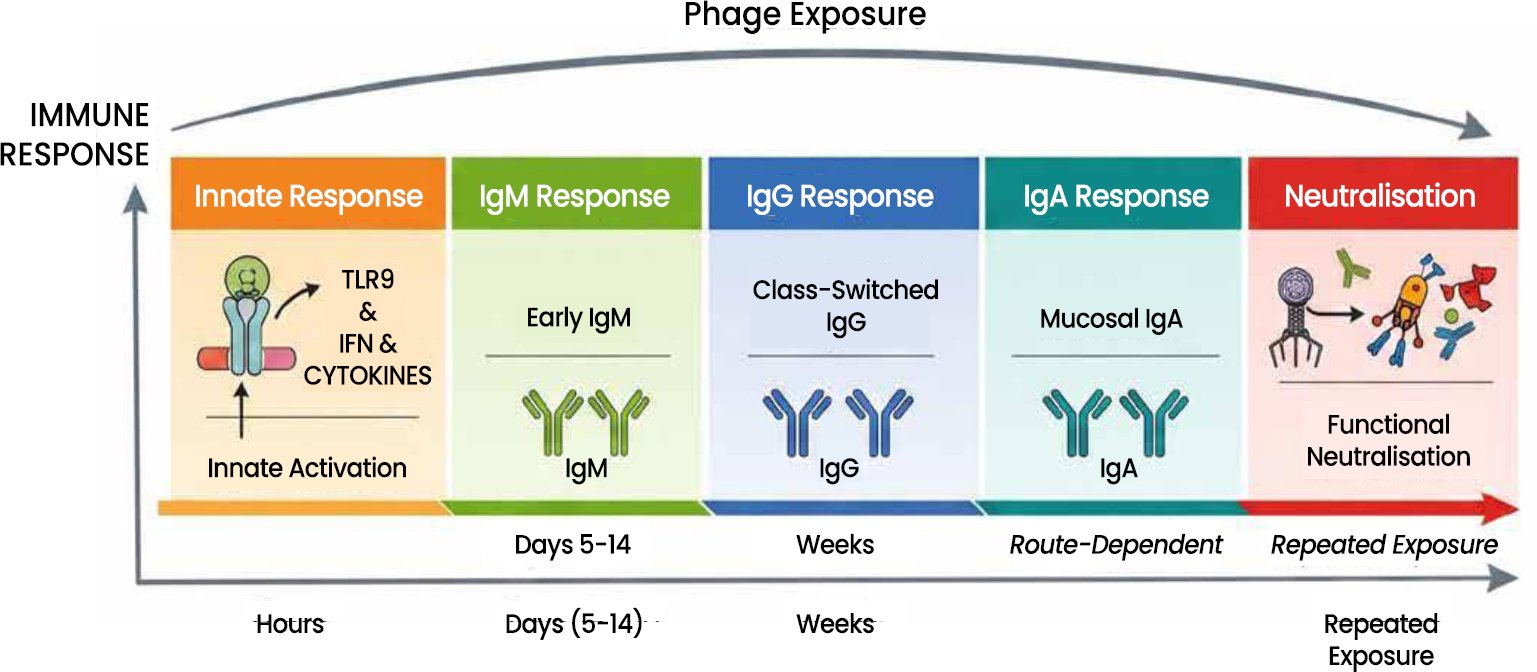
Fig. (3). Illustrative temporal framework for immune responses after bacteriophage exposure. The timing is conceptual and not a pooled estimate; actual kinetics vary by phage, host, route, dose, dosing frequency, and assay.
3.8. Conceptual Integration Frameworks
The conceptual framework separates five immune layers-innate recognition/signalling, IgM, IgG, IgA, and functional neutralisation-from pharmacokinetic clearance and antibacterial or clinical outcomes. This prevents accelerated clearance from being treated as proof of neutralising-antibody activity and prevents bacterial rechallenge protection from being labelled as phage-specific memory. Study findings can then be interpreted as immune responses without demonstrated inhibition, possible functional inhibition when neutralisation and/or altered persistence coincide with reduced phage activity, or preclinical bacterial protection after prior phage-treated infection. These are analytical categories, not causal or quantitative classifications (Fig. 4).
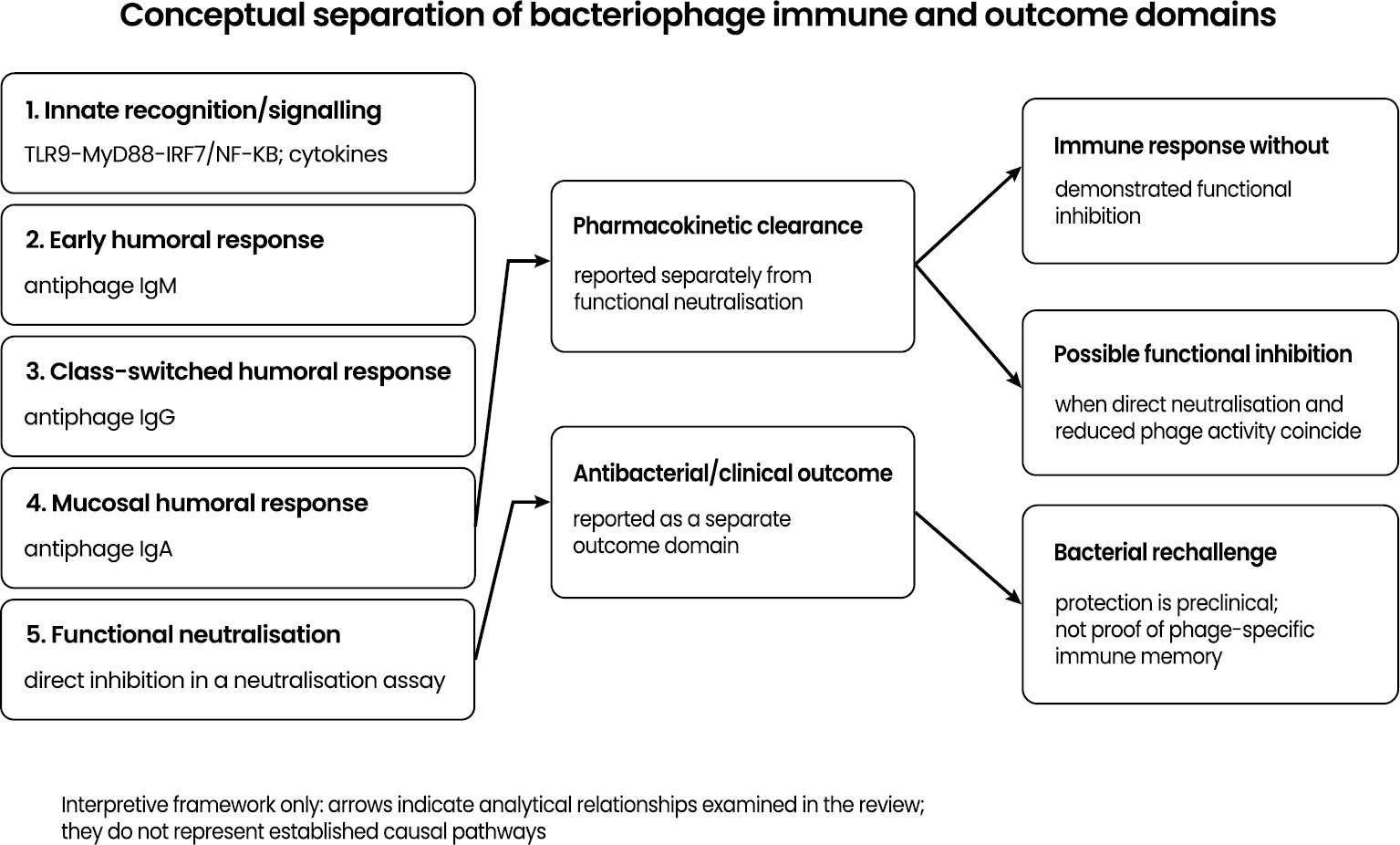
Fig. (4). Conceptual framework separating immune recognition, antibody formation, functional neutralisation, pharmacokinetic clearance, and antibacterial outcomes. The arrows indicate analytical relationships examined in the review and do not imply established causal pathways.
4. DISCUSSION
This review demonstrates that therapeutic and experimental exposure to bacteriophages can result in quantifiable host immune responses, but the clinical significance of such responses is not clear. The heterogeneous evidence is in host systems, exposure settings, phage preparations, routes, dosing schedules, and assays. A conditional interpretation is the most plausible; then, anti-phage antibodies and functional neutralisation can arise, especially when exposure is repeated in certain models, but the existing human data are inadequate to prove that immune activation always decreases antibacterial benefit.
4.1. Immunogenicity of Bacteriophage Therapy: A Layered Immune Response
The data substantiates a stratified concept of bacteriophage immunogenicity. It is also possible to have inherent recognition that is not followed by functional inhibition, as evidenced by mechanistic studies of phage-DNA sensing [22]. Humoral responses also need to be carefully interpreted due to the non-equivalence between binding and neutralising antibodies. This is the key difference between the two in relation to the review: immunogenicity determines host recognition, and functional neutralisation presupposes direct evidence of the loss of phage infectivity under specific conditions of the assays.
Recurring exposure to phages in murine studies by Kaźmierczak et al. [16] and Hodyra-Stefaniak et al. [24] revealed the IgM and IgG responses, whereas the human components exhibited inconsistent pre-existing or treatment-related anti-phage recognition. Kaźmierczak et al. also demonstrated that phage activity could be neutralised by antibodies against a single structural protein, but not other highly immunogenic proteins. These findings show that the number of antibodies, specificity, and effect are three separate dimensions and therefore cannot be integrated into one measure of the immune response.
Immunogenicity cannot thus be considered the same thing as therapeutic inhibition. The outcome of a host response varies based on route, dose, repeated exposure, antigenicity of the phage in the host, host immune condition, burden of infection, and composition of the preparation given. Extended surveys of phage-immune interactions also explain this interaction as context-dependent [6]. The current synthesis builds upon that distinction to map the formation of antibodies, neutralisation, clearance, and antibacterial outcome as distinct domains of evidence.
4.2. Neutralising Antibodies and Therapeutic Inhibition: Conditional Rather Than Universal Effects
Functional neutralisation was best demonstrated in experiments that carried out plaque-based or serum neutralisation assays. Neutralising activity was observed to be strong following repeated subcutaneous administration of phages to rabbits [20], and increasing serum neutralisation was observed after repeated exposure in sheep [18]. Nonetheless, rapid loss of viable phage was also measured by Peez et al.; the pharmacokinetic effect of this can also not be explained by the neutralising antibodies. In human observational data, Żaczek et al. [26] discovered that antiphage antibody and neutralisation measures did not always correlate with worse clinical outcomes. Accordingly, a biologically significant neutralisation is not a universal determinant of treatment outcome.
Controlled animal work provides the best evidence of worsening repeat-use performance. Berkson et al. [19] demonstrated that phage-specific immunity might overlap with neutralisation, accelerated clearance, and decreased activity of susceptible phages during a second course. In comparison, Xing et al. [21] covered protection against bacterial reinfection and not against antiphage immunity. Their results cannot be seen as phages directly producing protective immune memory; bacterial lysis and response to the initial infection should also be considered as possible factors. These are some of the reasons why mechanistic, pharmacokinetic and antibacterial results have to be causally interpreted differently.
4.3. Clinical Significance Remains Uncertain
Human evidence is still scanty. The paper by Chen et al. [13] is a small, randomised phase 1 exposure study, and those by Dedrick et al. [14], Żaczek et al. [26], Kasprzak et al. [25], and Bernabéu-Gimeno et al. [23] are observational, compassionate-use, or case-based. These trials demonstrate that antiphage antibodies and neutralising activity are possible in humans, but they do not demonstrate safety or clinical efficacy in populations. Causal inference is further restricted by concomitant antibiotics, heterogeneous infections, personalised selection of phages, small samples, and variable sampling of immunity. Clinical evidence therefore implies that follow-up of immunogenicity should be continued instead of finding that antiphage immunity is reliable enough to either reliably undermine or reliably spare therapeutic effect.
4.4. Confounding and Interpretation
Confounding is also a strong influence on interpretation. Bacterial lysis and infection itself may release inflammatory stimuli such as bacterial antigens and endotoxin that can lead to changes in cytokines or gene expression. There were some healthy or pre-treatment samples that contained baseline anti-phage antibodies [14, 20, 24], so a post-exposure serology was challenging to interpret without paired baselines. Preparation of phage, purification processes, and bacterial remnants were not consistently indicated, and Kasprzak et al. [25] utilized sterile phage lysates that might have bacterial metabolic and disintegration products. The broadening extraction matrix thus captures phage formulation, dose, route, frequency, duration, infection/immune status, purification or endotoxin data, baseline antibodies, type of assay, pharmacokinetics and antibacterial results in each study (Appendix D).
4.5. Strengths of the Review
One of the strengths of this review is that the explicit distinction of immune recognition, antibody isotypes, functional neutralisation, pharmacokinetic persistence/clearance, and antibacterial or clinical outcomes is made. This framework solves a significant interpretive issue in the literature: a positive antibody response does not necessarily indicate neutralisation, loss of phage activity, and rapid clearance does not necessarily indicate loss of antibody-mediated neutralisation. The second strength is the incorporation of human, animal, and mechanistic evidence with mixed-design studies found and named openly instead of being assigned to one category. Evidence-map counts are auditable because of the study-by-outcome matrix and reconstructed study-level risk-of-bias tables that accompany the study.
4.6. Limitations of the Review
The review has a number of limitations. To begin with, the 14 studies were very heterogeneous with regard to host species, infection status, phage formulation, dose, route, treatment period, immune status, purification processes, and assays, making quantitative synthesis impossible. Second, there was limited human evidence, mostly observational, compassionate-use, or case-based, and one small phase 1 trial; preclinical results thus are only indirectly relevant to standard clinical practice. Third, the elements of randomisation, allocation concealment, blinding, and selective-reporting protection were often ambiguous in animal research. The PubMed search history also used a Humans filter; thus, preclinical evidence relied mostly on retrieval by Scopus and Web of Science, and thus, it might not be as sensitive to some animal or mechanistic reports. Fourth, the AMR-based search strategy of PubMed and Web of Science might have decreased sensitivity to relevant immunogenicity studies not surrounding resistant-infection situations. Fifth, five out of 52 reports requested to be retrieved (13.5%) were not evaluated as full texts, which posed a possible source of selection bias. The archived screening documentation failed to maintain a full citation-level correspondence of all 31 full-text exclusions or the seven unretrieved reports, meaning record-level reproducibility is restricted despite having aggregate PRISMA counts and preset exclusion categories. Lastly, there was no formal GRADE assessment and thus confidence was described qualitatively and not given formal certainty levels. No sensitivity rerun without the AMR block was conducted; hence, the amount and nature of possibly missed studies cannot be measured.
4.7. Implications for Future Research
Future research needs to incorporate immunological, pharmacokinetic, microbiological, and clinical endpoints in the same protocol in a prospective manner. Measures of baseline and serial antiphage antibodies should be done using specific isotypes, and appropriate neutralisation functionality assays should be validated. A viable-phage pharmacokinetics needs to be evaluated independently of antibody-mediated neutralisation. Phage identity, dose, route, frequency, duration, purification method, endotoxin burden, host immune status, concomitant antimicrobials, and characteristics of infection should also be reported in studies. Human studies with control and harmonised assay definitions are especially relevant to define whether particular immune responses can predict clinically significant changes in phage exposure or antibacterial results. With the emergence of larger harmonised datasets, transparent machine-learning methods may also be considered to combine the prediction of immune, pharmacokinetic, microbiological, and clinical variables. Three of the three applicable design principles are exemplified in cross-domain applied AI work, which isolates signal using heterogeneous and unstructured records, uses past- and context-predictors, and reveals model drivers via explainability techniques [27–29], but any such model in phage research would need prospective biological and clinical validation.
CONCLUSION
The systematic review combined 14 articles on host immune responses to exposure to bacteriophages in therapeutic and experimental conditions. Exposure to bacteriophages may cause innate signalling and antiphage antibodies, and neutralisation was shown to be functional in a number of studies in humans and animals. Nonetheless, antibody detection, functional neutralisation, pharmacokinetic clearance and the outcome of antibacterial activity are different endpoints, and they cannot be regarded as equivalent evidence. Serial systemic or parenteral exposure has been known to cause strong neutralisation in certain models, but the evidence available is too heterogeneous to determine a general route-dependent effect or a standard causal decrease in clinical efficacy.
There is still limited human evidence that is mostly exploratory or observational. Protection against bacterial rechallenge in mice has only been found to be associated with preclinical host protection linked to previous infection and phage-mediated lysis, and not evidence of phage-specific immune memory. The review in general suggests the presence of controlled monitoring of immunogenicity in the course of phage exposure and no generalized statements about the safety, efficacy, or immune-mediated treatment failure. The clinical implications of the immunogenicity of bacteriophages can only be defined with certainty after more rigorous clinical studies are conducted where the antiphage antibodies, functional neutralisation, viable-phage pharmacokinetics, and antibacterial outcomes are all jointly measured.
LIST OF ABBREVIATIONS
AMR | = | Antimicrobial Resistance |
RoB 2 | = | Cochrane Risk of Bias 2 |
WOS | = | Web of Science |
AUTHOR’S CONTRIBUTION
H.A. was responsible for study conceptualization, methodology design, data compilation, analysis and interpretation, and manuscript writing.
CONSENT FOR PUBLICATION
Not applicable.
REPORTING GUIDELINES
This study was conducted in accordance with PRISMA guidelines.
AVAILABILITY OF DATA AND MATERIALS
The data will be made available on reasonable request by contacting the corresponding author [H.A.].
FUNDING
None.
CONFLICT OF INTEREST
The author declares no conflict of interest.
ACKNOWLEDGEMENTS
The author would like to express their gratitude to all researchers whose work contributed to this review.
DECLARATION OF AI
ChatGPT was used for language polishing and improving the readability of the manuscript. The author reviewed the suggested changes and takes full responsibility for the final content.
APPENDIX A: DATABASE SEARCH SCREENSHOTS
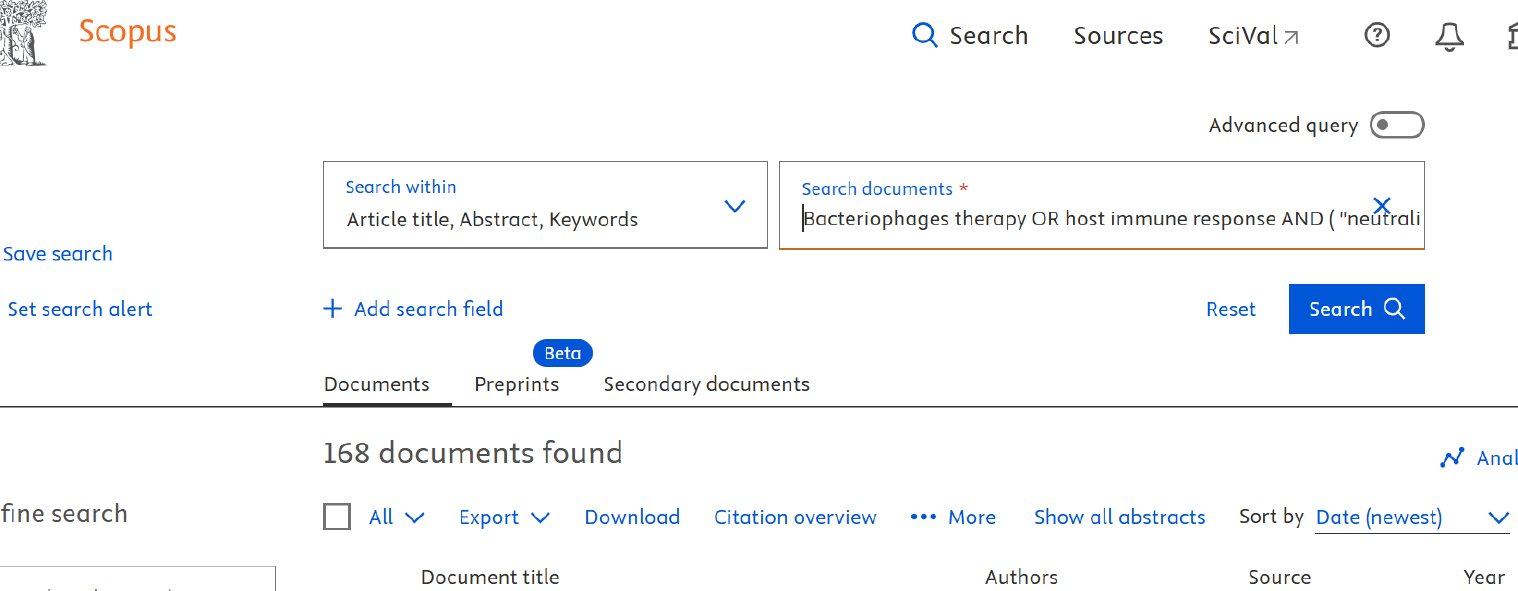
Fig. (A1). Scopus search screenshot showing 168 records retrieved.
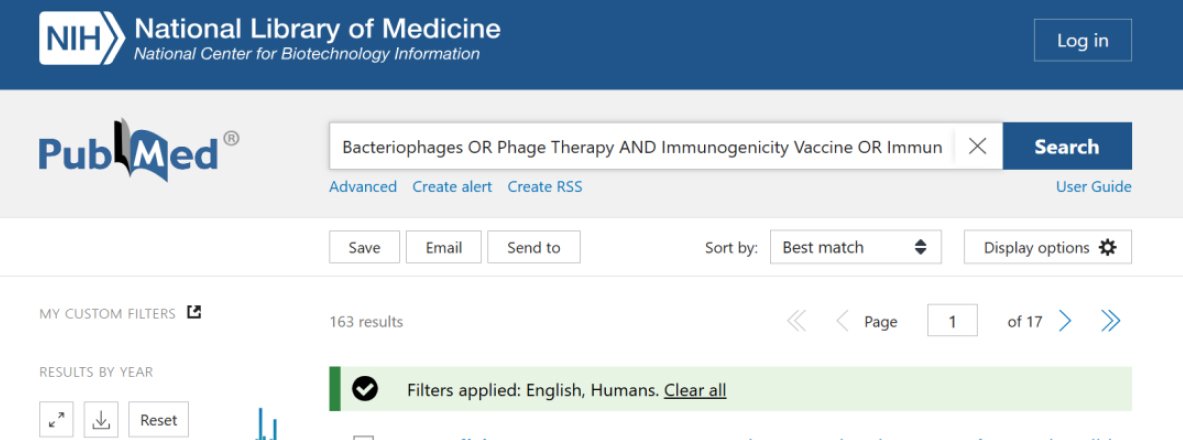
Fig. (A2). PubMed search screenshot showing 163 records retrieved.
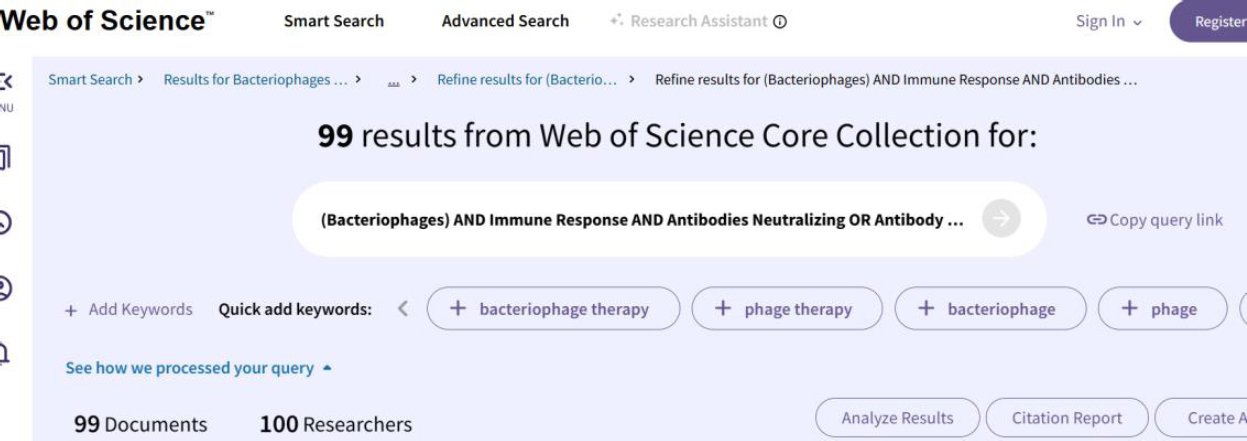
Fig. (A3). Web of Science search screenshot showing 99 records retrieved.
Appendix B: Reproducible Database Search Strategies
The search syntax below is reproduced as executed in each database. Quoted phrases, wildcard truncation, database field tags, controlled vocabulary, filters, publication limits, exact search date, and retrieved record counts are reported without harmonising database-specific syntax. Scopus searched TITLE-ABS-KEY fields, PubMed combined MeSH with Title/Abstract terms and applied English and Humans filters, and Web of Science used Topic (TS) searching. The strategies are presented exactly as executed; their relative narrowness and filtering are reported transparently rather than masked by post hoc expansion. No synonyms, Boolean operators, field tags, or database filters were reconstructed or added during final reporting. Appendices A–F together provide the reproducibility materials for this review: database screenshots, exact executed search strategies, PRISMA accounting and exclusion definitions, extraction matrices, the study-by-outcome evidence map, and study-level risk-of-bias assessments.
Table A1. Database search strategies, restrictions, search date and retrieved records.
| Database | Exact Search Strategy and Restrictions | Records Retrieved |
| Scopus | TITLE-ABS-KEY((“bacteriophages therapy” OR “host immune response”) AND (“neutralising antibod*” OR “neutralising antibod*” OR antibod* OR humoral)) Search date: 12 January 2026. Publication years: 2015-2025. Language filter in database syntax: none. | 168 |
| PubMed | ((“Bacteriophages”[MeSH Terms] OR “phage therapy”[Title/Abstract]) AND (immunogenicity[Title/Abstract] OR vaccine[Title/Abstract] OR “immune response”[Title/Abstract])) AND (“Antibodies, Neutralizing”[MeSH Terms] OR “Antibody Formation”[MeSH Terms]) AND (“Drug Resistance”[MeSH Terms] OR “Drug Resistance, Bacterial”[MeSH Terms] OR “antimicrobial resistance”[Title/Abstract]) Search date: 12 January 2026. Publication dates restricted to 1 January 2015-31 December 2025. Database filters shown in the search record: English and Humans. | 163 |
| Web of Science | TS=((“Bacteriophages” OR “Phage Therapy”) AND “Immune Response” AND (“Antibodies Neutralising” OR “Antibody Formation”) AND “antimicrobial resistance”) Search date: 12 January 2026. Publication years: 2015-2025. Language filter in database syntax: none. | 99 |
Appendix C: PRISMA Accounting and Full-Text Exclusion Reasons
Table A2. Screening and selection accounting.
| Stage | Scopus | PubMed | Web of Science | Total |
| Records identified | 168 | 163 | 99 | 430 |
| Duplicates removed | 24 | 20 | 12 | 56 |
| Records screened | 144 | 143 | 87 | 374 |
| Records excluded: irrelevant topic | 43 | 44 | 27 | 114 |
| Records excluded: no eligible immune/neutralisation outcome | 18 | 18 | 14 | 50 |
| Records excluded: ineligible publication type | 61 | 64 | 33 | 158 |
| Total title/abstract exclusions | 122 | 126 | 74 | 322 |
| Reports sought for retrieval | 22 | 17 | 13 | 52 |
| Reports not retrieved | 3 | 2 | 2 | 7 |
| Reports assessed for eligibility | 19 | 15 | 11 | 45 |
| Full-text reports excluded | 13 | 10 | 8 | 31 |
| Studies included | 6 | 5 | 3 | 14 |
At full-text assessment, each report was assigned one primary exclusion reason to prevent double counting. The four operational categories in Table A2 account for all 31 full-text exclusions (6 + 9 + 8 + 8 = 31). Screening-record transparency: the archived documentation preserves the total of 31 full-text exclusions and the four primary exclusion categories, but not a complete citation-level linkage for every excluded article. No individual article identities or exclusion assignments have been inferred retrospectively.
Table A3. Primary full-text exclusion reasons (n = 31).
| Primary Reason | Operational Definition | Count |
| No eligible immunological/neutralisation endpoint | The full text did not report an eligible host immune marker, antiphage antibody, functional neutralisation, or phage pharmacokinetic endpoint. | 6 |
| No eligible bacteriophage exposure/intervention | The study did not evaluate therapeutic or experimental bacteriophage exposure within the prespecified host/immune scope. | 9 |
| Insufficient methodology or outcome information | The full text did not provide enough methodological or outcome information to determine eligibility against the prespecified criteria. | 8 |
| Secondary research/protocol/non-primary publication | Review, protocol, secondary analysis, or other non-primary report identified at full-text assessment. | 8 |
Seven of 52 reports sought for retrieval (13.5%) could not be assessed because complete full-text versions were not accessible through database-linked full-text access, DOI or publisher pages, open-access repositories, or additional title and author searches for alternative copies. Abstract or bibliographic information alone was not considered sufficient for eligibility assessment. These reports therefore remained in the PRISMA “not retrieved” category and were not included among the 31 full-text exclusions. Their absence is considered a potential source of selection bias in the limitations of the review. The seven unretrieved reports remain traceable at database level as Scopus (n = 3), PubMed (n = 2), and Web of Science (n = 2), but article-level identifiers were not retained for all seven records in the archived screening documentation. This limitation is reported explicitly rather than replaced with inferred citations.
Appendix D: Expanded Data Extraction Matrix
Table A4. Exposure, host, and preparation characteristics.
| Study | Host / Infection Status | Phage Formulation | Dose / Frequency | Route / Duration | Purification / Endotoxin Information |
| Chen et al. [13] | Healthy adults; no active Shigella infection. | ShigActive™, five lytic Shigella phages. | 1 × 10¹⁰ PFU/dose; three times daily. | Oral; 7 days (21 planned doses). | Manufactured clinical preparation; exact endotoxin value not reported in the extracted article text. |
| Dedrick et al. [14] | Patients with drug-resistant/refractory mycobacterial disease; immune status varied. | Personalised single phages or cocktails. | Most initially received 10⁹ PFU twice daily; regimens varied by case. | Intravenous and/or aerosol; commonly planned for months, with case-specific variation. | Compassionate-use preparations underwent case-specific preparation/release processes; endotoxin values were not consistently reported across cases. |
| Majewska et al. [15] | Mice without the target S. aureus host in the gut; non-infection exposure model. | A3R or 676Z staphylococcal phage. | 4 × 10⁹ PFU/mL in drinking water, approximately 2 × 10¹⁰ PFU/mouse/day. | Oral; 100-day exposure, 120-day withdrawal, 44-day re-exposure. | Purified phage preparations; exact endotoxin level not reported in the extracted article text. |
| Kaźmierczak et al. [16] | Mice; healthy human donors; phage-treated patients; human macrophage cell line. | A3R and 676Z plus selected structural proteins. | Mice: 10¹⁰ PFU/dose on repeated intraperitoneal exposures; protein and cell-line experiments used defined concentrations. | Intraperitoneal in mice; clinical routes varied; in vitro protein exposure 6 h. | Highly purified phages/proteins; recombinant proteins underwent endotoxin-removal steps; exact residual endotoxin values were not reported for all components. |
| Gangwar et al. [17] | Charles Foster rats; acute/subacute toxicity model without established infection. | Cocktail targeting XDR K. pneumoniae. | 1 mL at 10¹⁰ or 10¹⁵ PFU/mL; single dose or daily for 28 days. | Oral gavage; acute or 28-day subacute exposure. | Purification/endotoxin level not clearly reported in the extracted review data. |
| Peez et al. [18] | Healthy sheep and sheep with MRSA fracture-related infection. | Single S. aureus phage ISP. | 20 mL at 10⁹ PFU/mL, three times daily; repeated-course design in phase 1. | Intravenous or local; 10-day courses. | Filtration, dialysis, and ultrafiltration were reported; exact endotoxin concentration was not reported. |
| Berkson et al. [19] | Mice; VRE gut-colonisation model plus phage-only immune experiments. | Five-phage cocktail targeting VRE. | Repeated high-titre exposure; exact regimen varied by experiment. | Systemic administration in immune profiling and repeated treatment courses in the efficacy model. | Preparation procedures were described in the original report; exact endotoxin value was not consistently stated in the extracted outcome data. |
| Archana et al. [20] | Rabbits; non-infection immunisation model. | Purified phages against E. coli, K. pneumoniae, P. aeruginosa, S. Typhi, and S. aureus. | 10⁹ PFU per phage; weekly for 6 weeks. | Subcutaneous; 6 weeks. | Purified phage preparations; exact endotoxin level not reported. |
| Xing et al. [21] | Mice with lethal ExPEC bacteraemia and later bacterial rechallenge. | Lytic phage HP3 (plus confirmatory experiments with another phage/model). | Principal model: 10⁹ PFU every 12 h for 4 days after infection. | Intraperitoneal in the principal model; treatment during primary infection. | Phage preparation described in the original study; extracted review data did not provide a single endotoxin value for all experiments. |
| Podlacha et al. [22] | Infected and non-infected chickens; chicken lymphoblasts and mouse splenocytes in vitro. | vB_SenM-2 + vB_Sen-TO17 cocktail; purified phage DNA for mechanistic experiments. | 10⁹ PFU of each phage daily. | Oral in chickens for 14 days; in vitro DNA transfection. | Phage lysates were purified; reported endotoxin concentration was <1 EU/mL. |
| Bernabéu-Gimeno et al. [23] | Paediatric cystic-fibrosis patients with S. aureus and/or P. aeruginosa lung infection. | Personalised in-house monophages. | Patient-specific preparations; dosing details varied by treatment episode. | Nebulised; 10 days with standard-of-care antibiotics. | In-house clinical preparations; exact endotoxin values were not reported in the extracted review data. |
| Hodyra-Stefaniak et al. [24] | Mice; healthy human donors; F8-treated patients. | PB1-related phages LMA2, F8, DP1 and recombinant structural proteins. | Mice: 10¹⁰ PFU/dose on days 0, 20, and 55; protein immunisation used defined doses. | Intraperitoneal in mice; oral and/or topical in treated patients. | Highly purified phage/protein preparations; exact endotoxin values not reported for all components. |
| Kasprzak et al. [25] | Patients with chronic antibiotic-refractory bacterial infections. | Individually selected sterile phage lysates. | 10⁶-10⁹ PFU/mL depending on preparation and case. | Oral, topical, and/or inhaled; 13-29 days. | Sterile phage lysates in broth; bacterial metabolic/disintegration products could be present; endotoxin level not reported. |
| Żaczek et al. [26] | Patients with chronic staphylococcal infections plus healthy donors. | MS-1 staphylococcal phage cocktail. | Clinical dose varied by protocol; purified phage antigens were used for laboratory assays. | Oral and/or local; treatment duration varied by patient. | Therapeutic and assay preparations were described; exact endotoxin level was not reported in the extracted article text. |
Table A5. Immune, neutralisation, pharmacokinetic, and antibacterial outcome extraction.
| Study | Baseline Antiphage Antibodies | Antibody / Innate Assay | Functional Neutralisation Assay | PK / Persistence / Clearance | Antibacterial or Clinical Outcome |
| Chen et al. [13] | Not a principal reported endpoint. | Gastrointestinal inflammatory mediators and microbiome measures. | Not reported. | Not a principal endpoint. | Healthy-volunteer phase 1 study; no infection outcome. |
| Dedrick et al. [14] | No pre-phage sample was functionally neutralising among tested patients; some baseline ELISA reactivity occurred. | Serum IgG and sputum IgA ELISA in available samples. | >10³ reduction in phage titre over 24 h used as the reported neutralisation definition. | Phage DNA was assessed in selected specimens; no formal pooled PK model. | Clinical/microbiological response recorded; neutralisation was not consistently associated with poorer outcome. |
| Majewska et al. [15] | Baseline antibody levels measured before prolonged exposure. | ELISA for IgM, IgG, and IgA in blood/gut. | IgG-rich plasma showed in vitro neutralising activity. | Recovery of viable phage from faeces and blood used as bioavailability/persistence measures. | No bacterial infection efficacy endpoint. |
| Kaźmierczak et al. [16] | Natural antibodies assessed in healthy humans; patient samples included pre/during therapy. | ELISA for IgM/IgG; structural-protein serology; macrophage gene-expression microarray. | Serum/plasma neutralisation and protein-specific neutralisation assays. | Not a principal PK study. | No controlled antibacterial efficacy endpoint. |
| Gangwar et al. [17] | Not reported. | IL-1β, IL-4, IL-6, IFN-γ plus haematology, biochemistry, histopathology. | Not reported. | Not reported. | Toxicity/safety endpoints; no infected-animal antibacterial efficacy endpoint. |
| Peez et al. [18] | Baseline serum neutralisation assessed before repeated dosing. | Serum neutralisation assay; WBC and safety monitoring. | Modified serum phage-neutralisation assay with viable phage readout. | Serial plasma viable-phage titres at minutes to hours after dosing. | Bacterial load measured in infected sheep; no statistically significant additional reduction between treatment groups/routes. |
| Berkson et al. [19] | Naïve/control mice provided baseline comparison. | ELISA for phage-specific IgM/IgG; cytokine/flow-cytometry profiling. | In vitro phage neutralisation with immune serum. | Tissue phage clearance assessed after immune exposure. | Repeated-course antibacterial activity against VRE was reduced for susceptible phage types. |
| Archana et al. [20] | Pre-existing neutralising activity detected only against the E. coli-targeting phage. | No isotype-specific antibody assay was the principal endpoint. | Plaque-reduction neutralisation assay in serial serum samples. | Not reported. | No infection efficacy endpoint. |
| Xing et al. [21] | Antiphage antibodies were not the principal exposure metric. | Host protection was evaluated through infection/rechallenge experiments rather than antiphage serology. | Not reported as a principal endpoint. | Phage absence before rechallenge was assessed in supporting experiments. | Survival and bacterial burden after primary infection and later bacterial rechallenge. |
| Podlacha et al. [22] | Not reported. | IFN-α, IFN-β, TNF-α; TLR9-MyD88-IRF7/NF-κB and cGAS-STING pathway measurements. | Not reported. | Phage DNA persistence in blood was measured; viable-phage neutralisation was not the endpoint. | Study focused on immune mechanism rather than antibacterial efficacy. |
| Bernabéu-Gimeno et al. [23] | Baseline samples were obtained before/around treatment; neutralising activity emerged after therapy. | Longitudinal immune monitoring; neutralisation was the principal antiphage endpoint. | Serum phage-neutralisation assay. | Viable phage persistence in sputum up to 33 days after treatment. | Sputum bacterial load and clinical indicators; reduction occurred in two of three treatment episodes. |
| Hodyra-Stefaniak et al. [24] | Natural antibodies and baseline neutralising activity assessed in healthy donors and paired patient samples. | ELISA for murine IgM/IgG and human IgG. | Phage-neutralisation assays in mouse and human samples. | Not a formal PK study. | No controlled antibacterial efficacy endpoint. |
| Kasprzak et al. [25] | Not an antiphage-antibody study. | qPCR for 22 immune-related genes in PBMCs and granulocytes; CRP/ESR correlations. | Not reported. | Not reported. | Clinical outcome was recorded and correlated with inflammatory/gene-expression measures. |
| Żaczek et al. [26] | Pre-treatment IgG/IgA/IgM and neutralising activity measured. | ELISA for IgG, IgA, and IgM. | Serum phage-inactivation/neutralisation (K rate). | Not reported. | Clinical outcome compared with antibody/neutralisation measures; no consistent adverse association was found. |
Appendix E: Study-Level Risk-of-Bias Assessments
Decision rules: L = low risk; H = high risk; U = unclear because the relevant method was not adequately reported. “Unclear” was used when randomisation, allocation concealment, blinding, or another safeguard was not reported; adequacy was not assumed. Mixed studies were appraised by component with the tool appropriate to that component. Table A10 includes all 14 included studies, while Tables A6–A9 provide the corresponding design-specific domain or component judgements.
Table A7. Human clinical and observational components.
| Study | Design / Tool | Selection / Randomisation | Confounding / Comparability | Exposure & Outcome Measurement | Missing Data | Selective Reporting | Overall Interpretation |
| Chen et al. [13] | Randomised phase 1; RoB 2 | L – documented block randomisation and indistinguishable placebo. | L for randomisation-based comparability; very small sample affects precision, not RoB. | L – prespecified safety/inflammatory outcomes with blinded allocation. | L – >90% planned dosing and reported follow-up. | L/U – registered trial and reported principal outcomes; limited power. | Low risk of bias for principal outcomes; substantial imprecision and limited generalisability because n = 10. |
| Dedrick et al. [14] | Compassionate-use cohort; JBI cohort principles | U/H – treatment depended on phage susceptibility and compassionate-use eligibility; no random allocation. | H – heterogeneous disease, immune status, routes, durations, and concomitant antimicrobials. | L/U – microbiology and neutralisation assays objective, but clinical-response assessment was heterogeneous. | U – immune samples were not available for every patient/time point. | U – observational treatment programme without a prespecified comparative analysis. | Moderate-to-serious concern for causal treatment-effect inference; useful descriptive immune and microbiological evidence. |
| Bernabéu-Gimeno et al. [23] | Compassionate-use case report/series; JBI case-report/series principles | H – two patients/three treatment episodes selected for personalised therapy. | H – concurrent antibiotics and uncontrolled clinical context. | L – bacterial counts, phage persistence, and serum neutralisation were directly measured. | L/U – longitudinal samples reported, but case-level completeness varies. | U – case-based report without a registered comparative analysis. | High concern for generalisable efficacy inference; laboratory neutralisation and persistence findings remain informative. |
| Hodyra-Stefaniak et al. [24] | Human serological component; JBI analytical principles | U – convenience healthy-donor collection and selected treated-patient samples. | U/H – no randomised comparator; prior environmental exposure varies. | L – ELISA and functional neutralisation methods were described. | U – treated-patient sampling was limited and not uniform. | U – no preregistered human comparative protocol reported. | Moderate concern; strong assay detail but limited sampling and comparability. |
| Kaźmierczak et al. [16] | Human serological component; JBI analytical principles | U – selected healthy and treated sera, not population-random sampling. | U/H – baseline exposure and treatment characteristics varied. | L – ELISA and neutralisation assays were specified. | U – availability/timing of treated-patient samples varied. | U – no preregistered human analytical protocol reported. | Moderate concern for clinical inference; laboratory antibody/neutralisation evidence is more direct. |
| Kasprzak et al. [25] | Exploratory observational pre-post; JBI quasi-experimental/analytical principles | U/H – small selected clinical cohort; no random allocation. | H – heterogeneous infections, routes, phage lysates, ages, and concomitant care. | L – qPCR and inflammatory-marker measurements were objective. | L/U – paired sampling was reported for the analysed cohort. | U – exploratory multi-gene analysis and correlations; no confirmatory preregistered analysis stated. | Moderate-to-high concern for causal inference; results are hypothesis-generating. |
| Żaczek et al. [26] | Observational clinical study; JBI cohort/analytical principles | U/H – nonrandomised patients undergoing experimental therapy. | H – heterogeneous infections, routes, and treatment context. | L – ELISA and serum inactivation assays were described with statistical analysis. | U – repeated samples/timing varied by patient. | U – observational analysis without preregistered outcome hierarchy. | Moderate concern; suitable for association, not causal efficacy conclusions. |
Table A8. SYRCLE domain assessment for animal components (part 1).
| SYRCLE Domain | Majewska et al. [15] | Kaźmierczak et al. [16] | Gangwar et al. [17] | Peez et al. [18] | Berkson et al. [19] |
| Sequence generation | U | U | U | U | U |
| Baseline characteristics | L/U | U | L/U | L/U | L/U |
| Allocation concealment | U | U | U | U | U |
| Random housing | U | U | U | U | U |
| Blinding of caregivers/investigators | U | U | U | U | U |
| Random outcome assessment | U | U | U | U | U |
| Blinded outcome assessment | U | U | U | U | U |
| Incomplete outcome data | L/U | L/U | L | L/U | L/U |
| Selective outcome reporting | U | U | U | U | U |
| Other bias | L/U | L/U | L/U | H/U – surgical/infection complexity and concomitant vancomycin in infected phase | L/U – multiple experimental submodels |
Table A9. SYRCLE domain assessment for animal components (part 2).
| SYRCLE domain | Archana et al. [20] | Xing et al. [21] | Podlacha et al. [22] | Hodyra-Stefaniak et al. [24] | Overall Domain Interpretation |
| Sequence generation | U | U | U | U | Random sequence generation was commonly unreported. |
| Baseline characteristics | U | L/U | L/U | U | Baseline comparability was variably described. |
| Allocation concealment | U | U | U | U | Allocation concealment was generally unreported. |
| Random housing | U | U | U | U | Random housing was generally unreported. |
| Blinding of caregivers/investigators | U | U | U | U | Performance blinding was generally unreported. |
| Random outcome assessment | U | U | U | U | Random outcome assessment was generally unreported. |
| Blinded outcome assessment | U | U | U | U | Assessor blinding was generally unreported. |
| Incomplete outcome data | L | L/U | L/U | L/U | Attrition was not a major reported issue, but completeness varied. |
| Selective outcome reporting | U | U | U | U | Prospective animal protocols/outcome hierarchies were generally not reported. |
| Other bias | L/U | L/U – multiple cohorts and exploratory mechanistic extensions | L/U – combined infection and cell-mechanistic components | L/U – repeated immunisation and mixed human/animal programme | Animal evidence should not be characterised globally as low risk; key safeguards were often unclear. |
Table A10. Adapted OHAT assessment for in vitro/mechanistic components.
| OHAT-Adapted Domain | Kaźmierczak et al. [16] Macrophage Component | Podlacha et al. [22] Cell-Transfection Component | Judgement Rule | Interpretation |
| Experimental conditions / controls | L – treated and control cell conditions were defined. | L – phage-DNA, bacterial-DNA, and control conditions were specified. | L when conditions and comparison groups were explicitly defined. | Both components used defined experimental comparators. |
| Exposure characterisation | L – selected phage proteins and concentrations were specified. | L – phage DNA and transfection procedures were specified. | L when exposure material and dose/concentration were described. | Exposure definition was adequate for the reported mechanistic assays. |
| Outcome measurement | L – gene-expression microarray workflow and analysis were described. | L – RT-qPCR/ELISA/phosphorylation and dsRNA measurements were described. | L when objective laboratory methods were prespecified/described. | Objective assays reduce detection concern. |
| Blinding / independent assessment | U | U | U when blinding or independent assessment was not reported. | Blinding was not assumed. |
| Incomplete data | L/U | L/U | L if all planned experimental units are clearly represented; otherwise U. | No major attrition signal was identified, but reporting was not designed as a formal RoB study. |
| Selective reporting | U | U | U when a prospective protocol/outcome hierarchy is not available. | Selective-reporting risk cannot be ruled out. |
| Other bias | H/U – single macrophage cell line limits generalisability. | L/U – cross-species cell systems strengthen replication but remain mechanistic. | Consider model-specific limitations separately from internal assay quality. | Mechanistic findings are informative but indirect for clinical outcomes. |
Table A11. Study-level risk-of-bias summary and principal limitation.
| Study | Definitive Design Classification | Appraisal Approach | Principal Risk-of-Bias / Interpretive Concern |
| Chen et al. [13] | Human randomised phase 1 trial | RoB 2 | Low risk of bias for principal outcomes; very small sample creates imprecision rather than a RoB 2 downgrade. |
| Dedrick et al. [14] | Human compassionate-use cohort | JBI nonrandomised cohort principles | Confounding, heterogeneous treatment, selection by phage susceptibility, and incomplete immune sampling. |
| Majewska et al. [15] | Animal non-infection repeated oral exposure | SYRCLE | Randomisation, allocation concealment, housing, and blinding largely unreported. |
| Kaźmierczak et al. [16] | Mixed animal- human- in vitro | SYRCLE + JBI + adapted OHAT | Mixed components require separate appraisal; animal safeguards and human sampling comparability are unclear. |
| Gangwar et al. [17] | Animal non-infection toxicity study | SYRCLE | Randomisation/blinding details unclear; toxicity model indirect for therapeutic efficacy. |
| Peez et al. [18] | Animal healthy/infection route-comparison study | SYRCLE | Small groups, complex surgical/infection model, unclear allocation/blinding, and concomitant vancomycin in infected phase. |
| Berkson et al. [19] | Animal infection plus immune-profiling experiments | SYRCLE | Multiple experimental submodels; randomisation/allocation/blinding not consistently reported. |
| Archana et al. [20] | Animal immunisation study | SYRCLE | Very small rabbit sample; randomisation and blinding not reported. |
| Xing et al. [21] | Animal infection/rechallenge study | SYRCLE | Randomisation/blinding incompletely reported; rechallenge protection should not be interpreted as phage-specific immune memory. |
| Podlacha et al. [22] | Mixed animal- in vitro mechanistic study | SYRCLE + adapted OHAT | Animal allocation/blinding unclear; mechanistic cell results are indirect for clinical outcomes. |
| Bernabéu-Gimeno et al. [23] | Human compassionate-use case report/series | JBI case-report/series principles | Two patients/three episodes, concurrent antibiotics, and no control group. |
| Hodyra-Stefaniak et al. [24] | Mixed animal- human serological study | SYRCLE + JBI analytical principles | Animal safeguards unclear; selected human samples and variable prior exposure limit comparability. |
| Kasprzak et al. [25] | Human exploratory observational pre-post study | JBI analytical/quasi-experimental principles | n = 10, no control, heterogeneous infections/routes, multiple exploratory gene analyses. |
| Żaczek et al. [26] | Human observational clinical study | JBI cohort/analytical principles | Nonrandomised treatment, heterogeneous clinical context, and variable sampling; suitable for association not causality. |
Appendix F: Study-by-Outcome Evidence Map
Table A6. Traceable study-by-outcome matrix.
| Study | Evidence Context | Innate | IgM | IgG | IgA | Neutralisation | PK / Clearance | Antibacterial / Clinical Linkage |
| Chen et al. [13] | Human | Yes | No | No | No | No | No | No |
| Dedrick et al. [14] | Human | No | No | Yes | Yes | Yes | No | Yes |
| Majewska et al. [15] | Animal | No | Yes | Yes | Yes | Yes | Yes | No |
| Kaźmierczak et al. [16] | Mixed human-animal-in vitro | Yes | Yes | Yes | No | Yes | No | No |
| Gangwar et al. [17] | Animal | Yes | No | No | No | No | No | No |
| Peez et al. [18] | Animal | No | No | No | No | Yes | Yes | Yes |
| Berkson et al. [19] | Animal | Yes | Yes | Yes | No | Yes | Yes | Yes |
| Archana et al. [20] | Animal | No | No | No | No | Yes | No | No |
| Xing et al. [21] | Animal | No | No | No | No | No | No | Yes |
| Podlacha et al. [22] | Mixed animal- in vitro | Yes | No | No | No | No | No | No |
| Bernabéu-Gimeno et al. [23] | Human | No | No | No | No | Yes | Yes | Yes |
| Hodyra-Stefaniak et al. [24] | Mixed human-animal | No | Yes | Yes | No | Yes | No | No |
| Kasprzak et al. [25] | Human | Yes | No | No | No | No | No | Yes |
| Żaczek et al. [26] | Human | No | Yes | Yes | Yes | Yes | No | Yes |
Note: Counting rule: “Yes” means that the study assessed or reported the specified outcome domain, irrespective of direction or statistical significance. The unique-study totals derived from this matrix are: innate signalling/cytokines 6/14, IgM 5/14, IgG 6/14, IgA 3/14, functional neutralisation 9/14, pharmacokinetic persistence/clearance 4/14, and antibacterial/clinical outcome linkage 7/14. Mixed studies are counted once in the unique-study denominator for an outcome, while distinct study components may contribute to more than one evidence-context count in Table 4 and Fig. (2).
REFERENCES
[1] Garvey M. Bacteriophages and the one health approach to combat multidrug resistance: is this the way? Antibiotics. 2020 Jul 16;9(7): 414.
https://doi.org/10.3390/antibiotics9070414
[2] Coque TM, Cantón R, Pérez-Cobas AE, Fernández-de-Bobadilla MD, Baquero F. Antimicrobial resistance in the global health network: known unknowns and challenges for efficient responses in the 21st century. Microorganisms. 2023 Apr 17;11(4): 1050.
https://doi.org/10.3390/microorganisms11041050
[3] Pal N, Sharma P, Kumawat M, Singh S, Verma V, Tiwari RR, Sarma DK, Nagpal R, Kumar M. Phage therapy: An alternative treatment modality for MDR bacterial infections. Infect Dis. 2024 Oct 2;56(10): 785-817.
https://doi.org/10.1080/23744235.2024.2379492
[4] Criscuolo E, Spadini S, Lamanna J, Ferro M, Burioni R. Bacteriophages and their immunological applications against infectious threats. J Immunol Res. 2017;2017(1): 3780697.
https://doi.org/10.1155/2017/3780697
[5] Champagne-Jorgensen K, Luong T, Darby T, Roach DR. Immunogenicity of bacteriophages. Trends Microbiol. 2023 Oct 1;31(10): 1058-71.
https://doi.org/10.1016/j.tim.2023.04.008
[6] Popescu M, Van Belleghem JD, Khosravi A, Bollyky PL. Bacteriophages and the immune system. Annu Rev Virol. 2021 Sep 29;8(1): 415-35.
https://doi.org/10.1146/annurev-virology-091919-074551
[7] Jacobs AC, Dugan J, Duplessis C, Rouse M, Deshotel M, Simons M, et al. Practical applications of bacteriophage therapy: biofilms to bedside. In Antibacterial Drug Discovery to Combat MDR: Natural Compounds, Nanotechnology and Novel Synthetic Sources 2019 Nov 10 (pp. 459-497). Singapore: Springer Singapore.
https://doi.org/10.1007/978-981-13-9871-1_21
[8] Van Belleghem JD, Dąbrowska K, Vaneechoutte M, Barr JJ, Bollyky PL. Interactions between bacteriophage, bacteria, and the mammalian immune system. Viruses. 2018 Dec 25;11(1): 10.
https://doi.org/10.3390/v11010010
[9] Febvre HP, Rao S, Gindin M, Goodwin ND, Finer E, Vivanco JS, Lu S, Manter DK, Wallace TC, Weir TL. PHAGE study: effects of supplemental bacteriophage intake on inflammation and gut microbiota in healthy adults. Nutrients. 2019 Mar 20;11(3): 666.
https://doi.org/10.3390/nu11030666
[10] Pollock A, Berge E. How to do a systematic review. Int J Stroke. 2018 Feb;13(2): 138-56.
https://doi.org/10.1177/1747493017743796
[11] Patino CM, Ferreira JC. Inclusion and exclusion criteria in research studies: definitions and why they matter. J Bras Pneumol. 2018 Mar;44: 84.
https://doi.org/10.1590/S1806-37562018000000088
[12] McKeown S, Mir ZM. Considerations for conducting systematic reviews: evaluating the performance of different methods for de-duplicating references. Syst Rev. 2021 Jan 23;10(1): 38.
https://doi.org/10.1186/s13643-021-01583-y
[13] Chen WH, Woolston J, Grant-Beurmann S, Robinson CK, Bansal G, Nkeze J, Permala-Booth J, Fraser CM, Tennant SM, Shriver MC, Pasetti MF. Safety and Tolerability of ShigActive™, a Shigella spp. Targeting Bacteriophage Preparation, in a Phase 1 Randomized, Double-Blind, Controlled Clinical Trial. Antibiotics. 2024 Sep 7;13(9): 858.
https://doi.org/10.3390/antibiotics13090858
[14] Dedrick RM, Smith BE, Cristinziano M, Freeman KG, Jacobs-Sera D, Belessis Y, Whitney Brown A, Cohen KA, Davidson RM, van Duin D, Gainey A. Phage therapy of Mycobacterium infections: compassionate use of phages in 20 patients with drug-resistant mycobacterial disease. Clin Infect Dis. 2023 Jan 1;76(1): 103-12.
https://doi.org/10.1093/cid/ciac453
[15] Majewska J, Kaźmierczak Z, Lahutta K, Lecion D, Szymczak A, Miernikiewicz P, Drapała J, Harhala M, Marek-Bukowiec K, Jędruchniewicz N, Owczarek B. Induction of phage-specific antibodies by two therapeutic staphylococcal bacteriophages administered per os. Front Immunol. 2019 Nov 14;10: 2607.
https://doi.org/10.3389/fimmu.2019.02607
[16] Kaźmierczak Z, Majewska J, Miernikiewicz P, Międzybrodzki R, Nowak S, Harhala M, Lecion D, Kęska W, Owczarek B, Ciekot J, Drab M. Immune response to therapeutic staphylococcal bacteriophages in mammals: kinetics of induction, immunogenic structural proteins, natural and induced antibodies. Front Immunol. 2021 Jun 14;12: 639570.
https://doi.org/10.3389/fimmu.2021.639570
[17] Gangwar M, Rastogi S, Singh D, Shukla A, Dhameja N, Kumar D, Kumar R, Nath G. Immunological and safety profile of bacteriophage therapy: A pre‐clinical study. J Appl Microbiol. 2022 Sep 1;133(3): 1446-60.
https://doi.org/10.1111/jam.15642
[18] Peez C, Chen B, Henssler L, Chittò M, Onsea J, Verhofstad MHJ, Arens D, et al. Evaluating the safety, pharmacokinetics, and efficacy of phage therapy in treating fracture-related infections with multidrug-resistant Staphylococcus aureus: intravenous versus local application in sheep. Front Cell Infect Microbiol. 2025 Apr 4;15: 1547250.
https://doi.org/10.3389/fcimb.2025.1547250
[19] Berkson JD, Wate CE, Allen GB, Schubert AM, Dunbar KE, Coryell MP, Sava RL, et al. Phage-specific immunity impairs efficacy of bacteriophage targeting Vancomycin Resistant Enterococcus in a murine model. Nat Commun. 2024 Apr 6;15(1): 2993.
https://doi.org/10.1038/s41467-024-47192-w
[20] Archana A, Patel PS, Kumar R, Nath G. Neutralizing antibody response against subcutaneously injected bacteriophages in a rabbit model. Virusdisease. 2021 Mar;32(1): 38-45.
https://doi.org/10.1007/s13337-021-00673-8
[21] Xing Y, Hernandez Santos HJ, Qiu L, Ritter SR, Zulk JJ, Lahowetz R, Patras KA, Terwilliger AL, Maresso AW. Phage-induced protection against lethal bacterial reinfection. Proc Natl Acad Sci USA. 2025 Jun 3;122(22): e2423286122.
https://doi.org/10.1073/pnas.2423286122
[22] Podlacha M, Gaffke L, Grabowski Ł, Mantej J, Grabski M, Pierzchalska M, Pierzynowska K, Węgrzyn G, Węgrzyn A. Bacteriophage DNA induces an interrupted immune response during phage therapy in a chicken model. Nat Commun. 2024 Mar 13;15(1): 2274.
https://doi.org/10.1038/s41467-024-46555-7
[23] Bernabéu-Gimeno M, Pardo-Freire M, Chan BK, Turner PE, Gil-Brusola A, Pérez-Tarazona S, Carrasco-Hernández L, Quintana-Gallego E, Domingo-Calap P. Neutralizing antibodies after nebulized phage therapy in cystic fibrosis patients. Med. 2024 Sep 13;5(9): 1096-1111.e6.
https://doi.org/10.1016/j.medj.2024.05.017
[24] Hodyra-Stefaniak K, Kaźmierczak Z, Majewska J, Sillankorva S, Miernikiewicz P, Międzybrodzki R, Górski A, et al. Natural and induced antibodies against phages in humans: induction kinetics and immunogenicity for structural proteins of PB1-related phages. Phage. 2020 Jun 1;1(2): 91-9.
https://doi.org/10.1089/phage.2020.0004
[25] Kasprzak H, Przybylski M, Fortuna W, Letkiewicz S, Rogóż P, Bubak B, Górski A, Międzybrodzki R. Analysis of Pro- and Anti-Inflammatory Gene Response Patterns in Patients Receiving Phage Therapy. Int J Mol Sci. 2025 Dec 23;27(1): 172.
https://doi.org/10.3390/ijms27010172
[26] Żaczek M, Łusiak-Szelachowska M, Jończyk-Matysiak E, Weber-Dąbrowska B, Międzybrodzki R, Owczarek B, Kopciuch A, Fortuna W, Rogóż P, Górski A. Antibody production in response to staphylococcal MS-1 phage cocktail in patients undergoing phage therapy. Front Microbiol. 2016 Oct 24;7: 1681.
http://dx.doi.org/10.3389/fmicb.2016.01681
[27] Patel V. AI-powered due diligence in private equity: automated analysis of financial, legal, and business intelligence data using NLP and deep learning. J Comput Anal Appl. 2026;35(9): 1-17. Available from: https://eudoxuspress.com/index.php/pub/article/view/5818
[28] Patel V. Machine learning models for predicting private equity fund performance using historical deal-level and macroeconomic data. MSW Manag J. 2026;36(2). Available from: https://mswmanagementj.com/index.php/home/article/view/4234
[29] Patel V. Explainable AI for private equity valuation: integrating financial statements, market signals, and risk-adjusted learning models. J Law Sustain Dev. 2026;14(5): e04658.
https://doi.org/10.55908/sdgs.v14i5.4658