

Article ID: PD2601203003
Views: 730Accuracy, Transparency, and Verifiability of Sustainability Communication in Hotel SMEs: A Comparative Analysis
 Article DOI
10.67887/PD2601203003
Article DOI
10.67887/PD2601203003
 PDF
PDF
⬇ Downloads: 28
1. INTRODUCTION
The Tourism represents one of the most economically and socially significant sectors in high-intensity tourism economies, exerting increasing pressure on the natural and cultural resources of destinations.
In this context, the hotel sector, which is strongly characterized by small and medium-sized enterprises (SMEs), plays a central role not only in the adoption of sustainability practices but also in the communication directed toward stakeholders. Within this scenario, the Italian hospitality context is particularly significant. In 2023, the sector in Italy generated value added equal to 18% of GDP and employed 13% of the national workforce, positioning Italy among the world’s largest hotel markets in terms of accommodation capacity, with 1,091,230 rooms available (Italian National Institute of Statistics, 2024).
These characteristics make the Italian hospitality context an appropriate empirical setting for analyzing the relationship between operational sustainability practices and the quality of environmental communication.
The hotel sector is also subject to increasing institutional pressure from the European Union, which urges operators to align with major sustainability initiatives, including the European Green Deal, the Next Generation EU program, and Sustainable Development Goal (SDG), encouraging the adoption of more sustainable tourism models.
However, hotel SMEs operate in a context that is currently characterized by the absence of formal sustainability reporting obligations, making disclosure predominantly voluntary, in line with the non-binding nature of international standards such as those proposed by the International Integrated Reporting Council (IIRC) (Paoloni et al., 2015; Paoloni et al., 2025; Biancone et al., 2023). Consequently, in line with legitimacy theory, sustainability communication may assume a predominantly symbolic function, oriented more toward strengthening corporate image and reputation than toward representing operational practices that are actually implemented. This informational asymmetry between statements and actions highlights the need for analytical tools capable of systematically assessing the quality and verifiability of the information disclosed (Vávrová, 2022).
Despite the extensive literature on sustainability in tourism, studies analyzing the quality and verifiability of sustainability communication in hotel SMEs remain limited (Iannaci, 2020), as do those examining differences attributable to governance structures that may influence such communication practices.
In light of the above, this study aims to analyze the quality of sustainability communication in hotel SMEs, with particular attention to the verifiability of the information disclosed and to potential differences associated with leadership structures. The research questions are as follows:
RQ1: What is the level of quality of sustainability communication among hotel SMEs operating in the Metropolitan City of Rome?
RQ2: Are there differences in the quality of sustainability communication in relation to female leadership in the hotel SMEs analyzed?
This study contributes to the sustainable tourism literature by extending the analysis of sustainability communication through the assessment of the degree of substantiveness or symbolicity of published statements (Boiral, 2013). Furthermore, it provides evidence on the role of governance structures, with particular reference to female leadership, considering female leadership as one of the governance dimensions associated with disclosure quality (Papagiannakis et al., 2024).
The limitations of this study include the small sample size, the selection and manual processing of data, and the voluntary nature of sustainability reporting among SMEs. Future research could extend the analysis to different geographical contexts or to other corporate communication channels. The study is structured into five sections: introduction, literature review, methodology, results, and conclusions.
2. LITERATURE REVIEW
The literature review is structured around four main strands: (i) sustainability in hotel SMEs and the limitations of strategic implementation; (ii) sustainability communication and the limits of voluntary disclosure; (iii) the role of digital channels in environmental communication, with particular attention to implications for consumers and governance structures; and (iv) female governance and sustainability communication. Overall, these perspectives enrich the academic debate on sustainability practices in hotel firms and show how such initiatives can strengthen business development and enhance the competitiveness of tourist destinations (Valeri & Paoloni, 2017). In this context, the study lies at the intersection of Legitimacy Theory and Signaling Theory, conceptualizing sustainability communication as a strategic tool through which firms both seek to gain and maintain stakeholders’ approval and signal to the market the quality of their environmental and social performance (Boiral, 2013).
Sustainability in Tourism and Hotel SMEs (i), the literature highlights that, in the tourism sector and particularly in the hotel industry, sustainability is assuming an increasingly strategic role, requiring advanced capabilities in reporting, measurability, and transparency, also in response to regulatory and institutional pressures. The concept of sustainability is articulated along three key dimensions, environmental, economic, and social, which, in the context of hotel SMEs, translate into practices related to energy efficiency, water conservation, waste management, and the attainment of environmental certifications (Sakshi et al., 2019).
Despite the growing attention to these issues, the literature shows that sustainability is often addressed in a fragmented manner. (Papafloratos et al., 2025) point out that although issues such as recycling, waste reduction, and food waste management are frequently declared, most establishments present unstructured reporting that is poorly aligned with the requirements of the Corporate Sustainability Reporting Directive (CSRD). This suggests that, in hotel SMEs, sustainability tends to be communicated as a set of isolated initiatives rather than as an integral part of a long-term strategy. This behavior can be interpreted, according to Legitimacy Theory, as an attempt by firms to align with institutional and social expectations through visible practices that are not necessarily integrated at the strategic level (Boiral, 2013).
Some contributions, however, indicate that specific models of “diffuse hospitality” can foster a greater integration of sustainability in hotel SMEs. In particular, (Valeri & Paoloni, 2017) show that environmental, social, and economic sustainability does not take the form of a set of isolated practices but rather constitutes a core element of the business model and of territorial competitiveness. Similarly, (Cosentino & Iannone, 2021) highlight that small accommodation facilities, when embedded in local networks, can improve sustainability management, transforming their limited size into a strategic factor for the creation of long-term sustainable value. In these cases, sustainability takes on a more substantive dimension, configuring itself as a genuine integration of sustainable practices into the business model.
The difficulties in implementing sustainable practices in SMEs can be attributed to cognitive, organizational, and managerial constraints. (Mousavi, 2022) notes that many firms display limited knowledge of the principles guiding sustainability, often associated with the perception of high investment costs and with organizational and managerial limitations typical of small and medium-sized enterprises. This limitation may undermine firms’ ability to produce reliable informational signals, increasing the risk of communications that are not fully representative of actual performance.
In small and medium-sized business contexts, medium-term objectives related to economic performance tend to prevail at the expense of a long-term vision oriented toward environmental conservation and sustainable value creation (Cozzio, 2019). These criticalities are reflected not only in the limited adoption of operational practices but also in the quality and consistency of sustainability communication.
Consumers play a fundamental role in the diffusion of sustainability in the hotel sector, as they tend to improve their purchasing behavior and strengthen corporate reputation when they perceive sustainability communication and related actions as authentic and credible (Khan et al., 2025). In this perspective, a distinction emerges between substantive communication, based on practices that are effectively implemented and verifiable, and symbolic communication, primarily oriented toward managing stakeholders’ perceptions (Michelon et al., 2015).
This suggests that sustainability may represent a competitive lever, provided that it is communicated consistently and supported by practices that are actually implemented. Indeed, sustainability does not automatically generate competitive value unless it is accompanied by communication capable of making the outcomes and impacts of the actions undertaken explicit (Du et al., 2010). This opens a debate on the role and limits of voluntary sustainability communication in the tourism sector.
Sustainability Communication and the Limits of Voluntary Disclosure (ii), to date, the Corporate Sustainability Reporting Directive (CSRD) imposes sustainability reporting obligations only on larger firms, with the aim of enhancing the comparability, transparency, and reliability of ESG information. Small and medium-sized enterprises (SMEs) are excluded from this regulatory scope and operate predominantly in a context of voluntary sustainability communication characterized by substantial information asymmetry (Abhayawansa & Adams, 2022). This asymmetry can be interpreted through the lens of Signaling Theory, whereby, in the absence of mandatory standards, firms use disclosure to signal the quality of their performance, albeit with heterogeneous levels of credibility (Spence, 1973).
This regulatory inequality raises important theoretical questions regarding corporate accountability and the quality of stakeholder decision-making processes (Zamboni et al., 2024). In the absence of regulatory obligations and sanctioning mechanisms, voluntary communication may lead investors, regulators, or other stakeholders to make decisions that are not fully informed. In this context, communication may take on a predominantly legitimizing, rather than informative, role.
Moreover, mandatory disclosure contributes to improving the quality and comparability of information but does not necessarily guarantee clarity or adaptability, thus limiting its effectiveness in supporting decision-making processes (Smirnow & Deng, 2023). Voluntary disclosure, by contrast, offers greater flexibility, promotes higher levels of transparency and compliance, and complements the benefits derived from mandatory disclosure (Smirnow & Deng, 2023).
However, the absence of obligations for SMEs and of effective sanctions encourages firms to adopt misleading statements in order to emphasize positive aspects of their sustainability performance while minimizing negative ones. The literature shows that the lack of regulatory obligations and sanctioning mechanisms can incentivize symbolic communication. (Hummel & Schlick, 2016) demonstrate that firms characterized by superior sustainability performance tend to provide more extensive and higher-quality disclosure, using it as a credibility tool vis-à-vis the market. Conversely, firms with poorer performance are more inclined to adopt symbolic communication practices, thereby increasing the risk of partial or opportunistic information.
In response to these limitations, the new EU Taxonomy Regulation explicitly recognizes the insufficiency of discretionary approaches and introduces technical screening criteria for classifying sustainable activities, with the aim of reducing informational ambiguity (Nipper et al., 2025).
Digital channels and web disclosure (iii), In the hospitality sector, digital channels represent the main tool for voluntary disclosure, amplifying both opportunities and reputational risks (Mariani & Borghi, 2021). Digital channels thus act as strategic tools through which firms manage their legitimacy while simultaneously signaling information to the market. Institutional websites and social media pages allow companies to communicate directly and promptly, responding to the growing expectations of customers (Inversini & Derchi, 2024). (Inversini & Derchi, 2024) state that online Corporate Social Responsibility (CSR) disclosures enable companies to effectively communicate their sustainability practices, in line with customer priorities, which increasingly emphasize sustainability in their decision-making processes. In this sense, websites and social media pages have become key tools for environmental disclosure, for strengthening customer trust, and for engaging with different stakeholders (Raghupathi & Raghupathi, 2024).
However, the voluntary and self-declared nature of communication exposes companies to significant challenges in terms of transparency, reliability, and accountability of information, which is often poorly standardized and scarcely verifiable. Sustainability is frequently promoted and disseminated through social media as an element of destination attractiveness, but the intensive use of social platforms requires consistency and transparency to avoid skepticism and distrust (Jones, 2017). Websites tend to convey more structured and formal communication, whereas social media foster more symbolic and promotional communication (Gupta et al., 2021). This distinction reflects a differentiated nature of communication: more substantive in institutional channels and more symbolic in social media channels (Du et al., 2010).
In this context, voluntary sustainability communication serves as a competitive positioning strategy in a saturated and highly competitive hospitality market, where companies are encouraged to communicate a “green” dimension as a distinctive leverage (Pastor-Marín, 2025). For this reason, communication channels are a determining factor in shaping the image of the tourism sector (Uner et al., 2023).
The central role of digital channels is particularly evident during times of crisis, when accommodation facilities intensify communication (including value-based communication) to preserve relationships and trust. During the pandemic, accommodation facilities widely relied on marketing and communication tools to support demand and convey messages of responsibility and safety, confirming the role of digital platforms as key infrastructures of reputation.
Sustainability communication is also relevant for specific tourism experiences (e.g., events and festivals, wine tourism), where the “sustainability” narrative contributes to building identity and perceived value but remains exposed to issues of comparability and verifiability when not supported by recognized indicators or certifications (Alebaki et al., 2022).
From the consumer perspective, there is growing sensitivity toward sustainability, particularly among segments that favor healthy lifestyles and younger segments (Generation Z) (Filimonau et al., 2022). These groups tend to base their purchasing decisions on verifiable sustainable practices (renewable energy, waste reduction, water and energy efficiency) and on evidence available online, such as reviews, social media posts, and verifiable certifications, which allow them to ensure that hotels do not disseminate misleading information (Galati et al., 2023; D’Arco et al., 2025). In this context, gender emerges as a relevant dimension both on the demand side and in corporate governance. Women show a greater propensity toward pro-environmental behaviors and a stronger demand for transparency and corporate accountability (Casado-Díaz et al., 2022), influencing decision-making practices within firms. This aspect suggests that gender composition in leadership may be associated with different approaches and levels of quality in sustainability communication.
Female governance and sustainability communication (iv), gender disparity influences the way sustainability is perceived and implemented. Numerous studies demonstrate a correlation between sustainability and gender equality, recognizing the role of women in organizations that have achieved significant sustainability outcomes (Barreiro-Gen & Bautista-Puig, 2022). Female participation in leadership roles, although not guaranteeing specific outcomes, tends to positively influence the adoption of environmental practices and the internal perception of corporate social responsibility (Rachmawati et al., 2024; Vila-Vázquez et al., 2023). From this perspective, female leadership may contribute to strengthening the alignment between communication and practices, fostering more substantive and less symbolic forms of disclosure (Post & Byron, 2015).
Women’s managerial competencies facilitate organizational change and the implementation of new initiatives (Cosentino & Paoloni, 2021), contributing to the development of inclusive leadership models that value gender diversity and integrate sustainability policies with human capital management, thereby strengthening firms’ sustainable performance (Sarwar & Loureiro, 2025).
Overall, the integration of Legitimacy Theory and Signaling Theory allows sustainability communication to be interpreted as a continuum ranging from symbolic forms, oriented toward managing perceptions, to substantive forms, based on verifiable practices and capable of generating credible signals for the market.
Based on an integrative perspective grounded in legitimacy theory and signaling theory, companies seek both to gain and maintain social acceptance and to communicate the quality of their environmental and social performance to the market, using sustainability as a tool for strategic differentiation. In the hotel sector, limited regulatory pressure encourages voluntary disclosure through corporate websites; however, such disclosure is often selective and poorly structured, reflecting an attempt to meet societal expectations rather than to provide comprehensive and standardized information. From a signaling perspective, the disclosure of reliable and verifiable information represents a key mechanism for enhancing credibility and competitiveness. However, for SMEs, producing quality sustainability information involves considerable costs and organizational effort. This explains the coexistence of more substantive forms of disclosure, typically disseminated through corporate websites, and more symbolic and promotional forms, particularly on social media.
Overall, integrating these perspectives allows us to view sustainability communication as a continuum that ranges from symbolic to substantive forms. In this context, companies use digital channels to manage stakeholder perceptions while also communicating their performance to the market.
3. METHODOLOGY
This study adopts a qualitative approach aimed at evaluating the quality of environmental sustainability information disclosed by hotel SMEs through their official websites, which represent the primary tools of self-presentation toward external stakeholders.
In line with the approach outlined by (Boiral, 2013), statements related to environmental sustainability contained in the textual and visual content of the websites were systematically analyzed, assessing their level of substantiveness based on verifiable evidence, such as hyperlinks to environmental certifications, technical documentation, measurable data, or references to explicitly declared operational interventions (e.g., reduction of energy consumption or environmental impact). Images were considered integral components of the communication strategy and were analyzed in relation to their narrative and symbolic functions.
The sample was extracted from the AIDA (Computerized Company Analysis) database and selected through a multi-stage process. In the first stage, 229 hotel firms operating in the Metropolitan City of Rome (ATECO code 55.10) were identified, in line with the defined geographical, sectoral, and size-related criteria. In the second stage, firms without an active website or those that were non-operational (e.g., under liquidation or inactive) were excluded, as they were not suitable for the analysis of communication content. The final sample subject to qualitative analysis therefore consists of 192 hotel firms with an active institutional website, deemed suitable for the analysis of sustainability communication.
The data collection phase was conducted in January 2026, ensuring the observation of updated and comparable digital content across the examined structures. The hospitality sector was selected due to its relevance in terms of environmental impact and the increasing regulatory pressure related to the introduction of the Corporate Sustainability Reporting Directive (CSRD) (2022), the European Sustainability Reporting Standards (ESRS) (2023), as well as the growing diffusion of environmental certifications in the tourism sector (e.g., ISO 14001, EU Ecolabel, B-Corp). The selection of units was carried out based on geographical, sectoral, and dimensional criteria consistent with the objectives of the study. In particular, firms located in the Metropolitan City of Rome, operating in the hotel sector (ATECO code 55.10), with an institutional website, and employing fewer than 250 employees were considered, in line with the European definition of SMEs. Furthermore, business types not fully consistent with the hotel model and non-operational firms were excluded, in order to ensure the coherence of the analyzed sample.
In order to include only proper hotel accommodation facilities, only companies whose corporate name included the term “hotel” were considered, excluding other types of businesses falling under the same ATECO code but characterized by different business models. Companies undergoing liquidation or inactive were excluded, in order to ensure the analysis of organizations that were effectively operating at the time of data collection.
The companies in the sample were classified as female-led or non-female-led according to two complementary criteria, consistent with Italian legislation (Law No. 215/1992) and with the literature on gender ownership in SMEs. The first criterion concerns governance: a company is considered female-led if the primary top management position (e.g., sole director, chairperson, CEO) is held by a woman. The second criterion concerns ownership: a company is considered female-led if female participation in share capital is equal to or greater than 50%, or if a female shareholder holds effective control. Companies that did not meet either of these criteria were classified as non-female-led.
In the first phase of the research, a manual textual and visual analysis of the content published on the official websites of the hotel companies included in the sample was conducted, following the approach proposed by (Boiral, 2013), which interprets images as functional elements in the construction of sustainability communication.
For each website, public sections (homepage, service descriptions, hotel presentation, and any pages dedicated to sustainability) were analyzed, and all expressions potentially related to environmental sustainability were extracted. Both generic formulations (e.g., eco-friendly, environmental respect, green oasis) and more specific references were considered, such as “renewable energy,” “organic and locally sourced products,” “reduction of single-use plastic,” “electric vehicle charging stations,” “LED systems,” “energy efficiency improvements,” or “third-party certifications” (e.g., Green Key, BioScore, Green Globe). From a visual content perspective, images were analyzed based on thematic recurrence, including representations of unspoiled nature, energy saving, environmental biodiversity protection, smiling workers, and harmonious communities. This phase allowed the identification of four types of content: (i) generic “green” language, represented by broad expressions such as eco-friendly, green oasis, and environmental respect; (ii) references to concrete operational practices, such as the presence of electric charging stations, the introduction of LED lighting, the elimination of single-use plastic, or the use of organic products; (iii) verifiable data, such as percentages of renewable energy use, water footprint indicators, and environmental certifications (Green Key, Green Globe, BioScore); (iv) total absence of sustainability references, where communication is exclusively based on comfort, services, and location.
In the second phase of the analysis, the quality of environmental disclosure was assessed by adopting the multidimensional approach proposed by (Michelon et al., 2015). Specifically, the Relative Quantity Index (RQI), the Accuracy Index (AI), and the Managerial Orientation Index (MOI) were calculated. The Density Index (DI), although included in the theoretical framework, was not calculated in the present study. The calculation of this indicator requires the exhaustive mapping of the entire communication content of each analyzed website, including all textual and visual content not directly related to sustainability. Considering the extension and dynamic nature of hotel institutional websites, such an operation would have entailed an excessive coding burden compared to the objectives of the study. The exclusion of the Density Index (DI) represents a deliberate methodological choice aimed at prioritizing the depth and accuracy of qualitative analysis, based on manual coding, over a more exhaustive but less in-depth mapping. This approach allows for greater reliability in the classification of sustainability-related content, albeit at the cost of reduced analytical breadth (Creswell, 2014).
This study presents several limitations that should be considered when interpreting the results. First, the analysis focuses exclusively on hotel SMEs located in the Metropolitan City of Rome, thus constituting a context-specific investigation. Therefore, the findings are specific to the analyzed context and cannot be automatically generalized to other geographical or sectoral settings characterized by different institutional and competitive dynamics. Second, the qualitative and manual nature of the analysis, while appropriate given the sample size (192 hotels) and effective in ensuring a high level of accuracy in content coding, limits the possibility of scaling the results to a broader population. Finally, the analysis of female leadership represents a specific focus within a broader analytical framework aimed at examining the role of governance structures in shaping the quality of sustainability communication. From this perspective, while the findings provide relevant insights within the analyzed context, further empirical validation is required to generalize the results to other settings.
4. RESULTS
4.1. Sample Description and Gender Leadership Classification
For each company included in the sample, the corporate name, location, number of employees (<250), governance composition, and ownership structure were recorded, with particular attention to the gender of the top executive figure.
Of the 229 hotels analyzed, 37 (16.5%) did not have an active website or were undergoing liquidation and were therefore excluded from the qualitative content analysis, in line with the research objectives. The evaluation of sustainability disclosures was conducted on 192 (83.84%) establishments with a functioning corporate website. This confirms the central role of the corporate website as the primary communication tool with stakeholders in the analyzed sample.
In accordance with the methodological criteria adopted for defining gender leadership, 49 companies (21.39% of the analyzed hotels) were classified as female-led, based on two dimensions: governance, defined as the gender of the individual holding the top executive position (Sole Administrator, Director, Chairperson of the Board of Directors, Chairperson of the Board of Statutory Auditors, or equivalent roles), and ownership, determined by the gender of the holder of the dominant shareholding. Non-female-led companies with an active website amounted to 180 (78.60% of the analyzed hotels). Table 1 presents the main characteristics of the analyzed sample.
Table 1. Classification of sustainability declaration types and their weights.
| Category | Number of Hotels | Percentage |
| Total hotels identified | 229 | 100% |
| Without website | 37 | 16.15% |
| With active website | 192 | 83.84% |
| – With sustainability communication | 64 | 33.33% |
| – Without sustainability communication | 128 | 66.66% |
| Leadership (based on total sample: 229) | – | – |
| – Female-led | 49 | 21.39% |
| – Non-female-led | 180 | 78.60% |
Source: Authors’ own elaboration based on AIDA data.
The textual analysis of the websites highlights a marked heterogeneity in the ways hotels communicate their relationship with environmental sustainability. The largest share of the sample, amounting to 128 establishments (66.66%), does not present any explicit reference to sustainability and focuses communication on elements such as comfort, location, style, or service quality. This finding highlights an overall low level of attention to environmental communication within the sample. Considering the entire sample of female-led companies, three hotels declare at least one concrete action or environmental certification, corresponding to 6.66% of female-led companies. Compared to the overall share of female-led companies, which accounts for 21.39% of the sample, this evidence indicates a marked asymmetry between online presence and substantive environmental communication, indicating a limited integration of sustainability into the communication strategies of female-led firms. However, the extremely small number of cases (3 out of 49) represents a critical issue that requires caution in interpreting the results. This result may suggest a limited integration of sustainability into the digital communication strategies of female-led companies within the sample. Table 2 illustrates sustainability communication among female-led companies.
Table 2. Distribution of environmental communication among female-led companies.
| Category | N | % |
| Total female-led companies (with website) | 45 | 100% |
| Total female-led companies (without website) | 4 | 8.88% |
| Female-led companies without environmental references | 29 | 64.44% |
| Female-led companies with environmental references | 16 | 33.33% |
| Female-led companies with at least one concrete action / certification | 3 | 6.66% |
Source: Authors’ own elaboration based on AIDA data.
4.2. Analysis of the Quality of Environmental Disclosure: Application of Environmental Disclosure Quality Indices
4.2.1. Relative Quantity Index
The “Relative Quantity Index” (RQIᵢₙ) measures the intensity of environmental communication of each company (i) in period (n) in relation to the maximum level of disclosure observed in the sample, defined as the highest number of environmental information units coded for a single company. The RQIᵢₙ allows the identification of companies that show a greater or lower propensity to communicate environmental issues on their website. The index is calculated according to the following formula:

where:
QDᵢ = number of environmental disclosure units for company i in period n
max(QDₙ) = maximum value of environmental disclosure units observed in the sample in period n
The analysis of the sample highlights a strong heterogeneity in the levels of communication intensity. This distribution indicates a low level of communication intensity across the sample. To facilitate the interpretation of the results, Fig. (1) presents the distribution of firms in the sample across the different classes of the Relative Quantity Index (RQI), allowing the level of environmental communication intensity to be observed relative to the maximum value recorded in the sample.
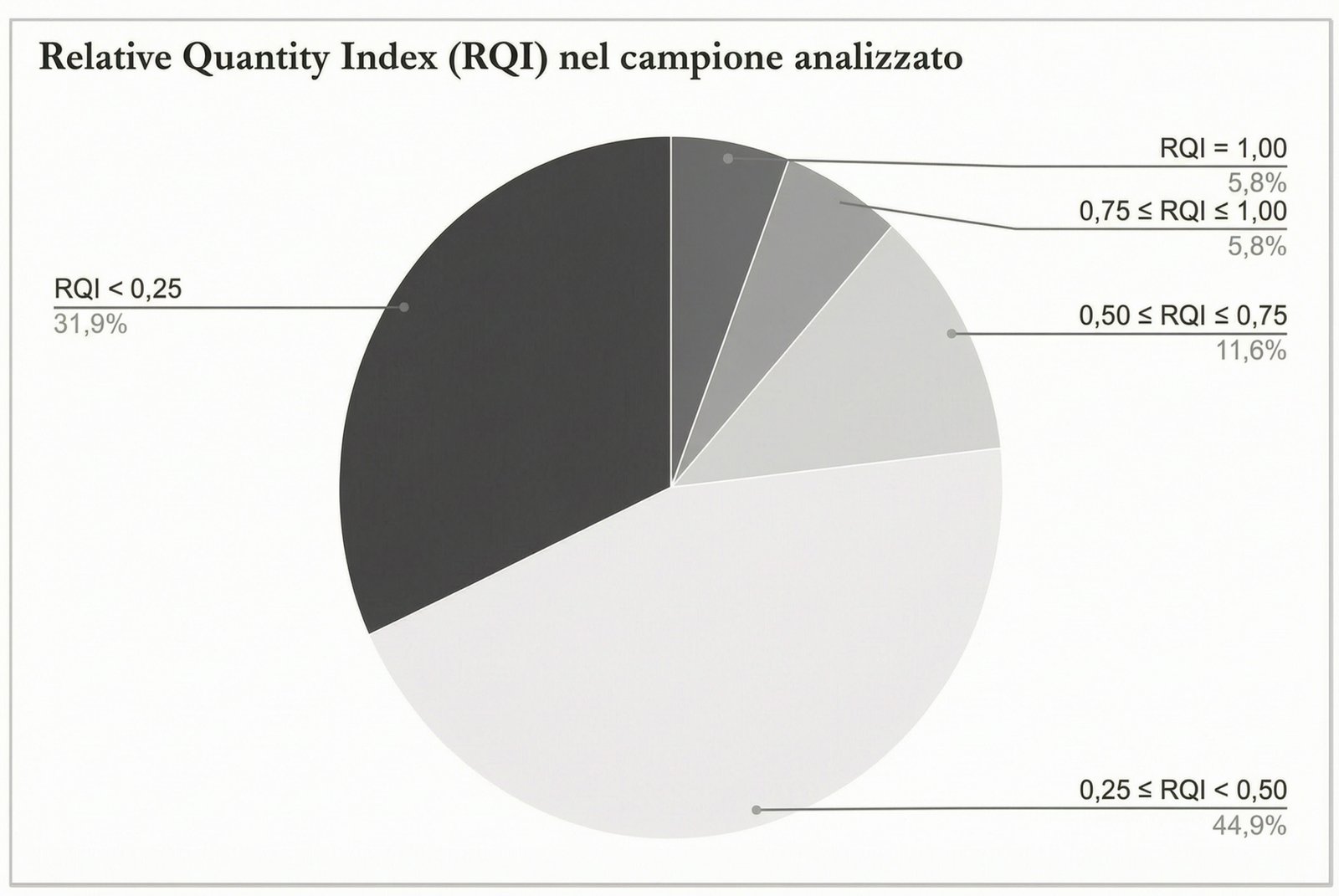
The results show that 31 companies fall within the class 0.25 ≤ RQI < 0.50 and 22 companies within the class RQI < 0.25, accounting for a total of 76.8% of the sample. This finding indicates that the majority of firms disclose a limited amount of environmental information. This highlights that the majority of establishments provide a limited volume of environmental information compared to the maximum observed within the sample. In line with (Michelon et al., 2015), the RQI measures the quantity of disclosure rather than its quality; therefore, the observed values of the index indicate fragmented communication, often focused on general statements rather than on systematic communication of corporate policies and performance related to sustainability. Only a limited proportion of companies, approximately eight establishments (11.6% with RQI ≥ 0.75, of which 5.8% with RQI = 1.00), adopts a more structured communication strategy regarding sustainability, highlighting that only a minority adopts a structured environmental communication approach. Consistent with the relevant literature (Michelon et al., 2015; Cho et al., 2012), this evidence supports the hypothesis of a predominantly symbolic approach to sustainability, in which environmental communication tends to prioritize visibility and reputational positioning over systematic and measurable reporting of management practices. In the hospitality context, these findings suggest that sustainability is frequently used as a communication positioning lever rather than as an area fully integrated into governance processes and operational management.The RQI results indicate that environmental communication is quantitatively limited and fragmented.
4.2.2. Managerial Orientation Index
The “Managerial Orientation Index” (MOIᵢₙ) measures the degree of integration of environmental sustainability into corporate management processes, distinguishing between communication of a symbolic nature and communication supported by operational evidence. In line with the approach proposed by (Michelon et al., 2015), the index assesses the presence of references to environmental policies, operational procedures, environmental objectives (more or less measurable), and third-party certifications as indicators of managerial orientation. The index is calculated according to the following formula:

Where:
Mᵢ = number of disclosure units supported by managerial and operational evidence for company i in period n
Sᵢ = total number of environmental disclosure units for company i in period n
To guide the interpretation of the results, Fig. (2) presents the distribution of firms in the sample across the different classes of the Managerial Orientation Index (MOI), allowing the degree of integration of environmental sustainability into managerial processes to be assessed.
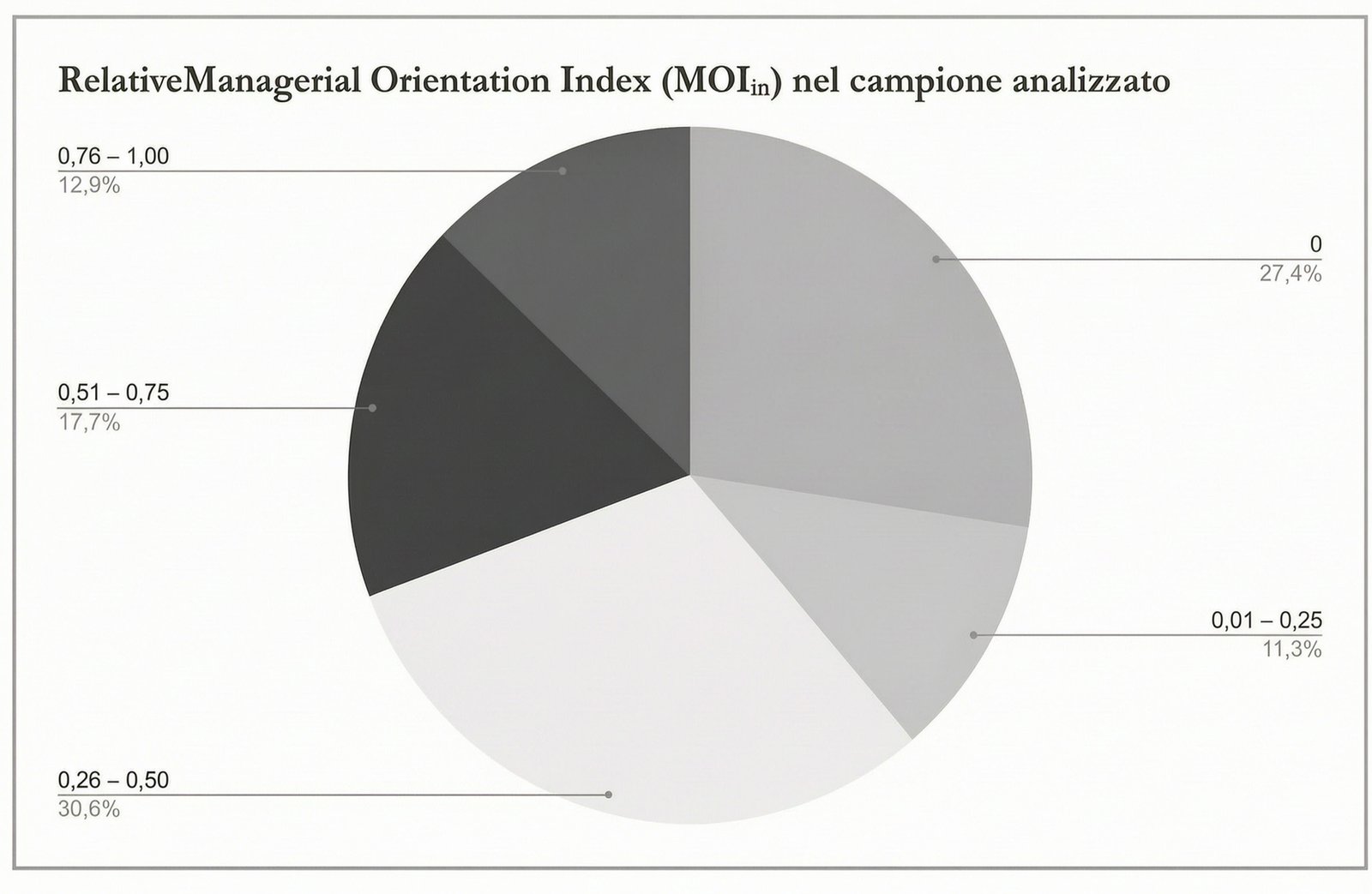
The Managerial Orientation Index (MOIᵢₙ) highlights a low level of integration of environmental sustainability at the managerial level. In particular, 27.4% of the companies in the sample show a value equal to 0, indicating the absence of a managerial orientation toward sustainability in a significant portion of the sample. This finding is consistent with (Boiral, 2013), who argues that in contexts characterized by voluntary disclosure, companies tend to prioritize communication strategies aimed at building their reputational image rather than providing substantive reporting. A further 11.3% falls within the range of 0.01–0.25, confirming the limited diffusion of formalized environmental management processes highlighted in the literature suggesting a very limited integration of environmental practices into firms’ managerial processes. Additionally, 30.6% of companies show an orientation within the 0.26–0.50 range, indicating a moderate level of integration that remains not yet fully structured. The 17.7% fall within the 0.51–0.75 range, highlighting that only a limited share of firms demonstrates a genuine integration of sustainability into decision-making processes. These results suggest the presence of a group of establishments that has initiated the integration of environmental policies and practices into management processes, although not in a systematic manner, in line with (Michelon et al., 2015). Only 12.9% of the sample presents values ranging from 0.76 to 1.00, suggesting that, in the context of the analyzed hotel SMEs, environmental sustainability remains only marginally integrated into management processes, confirming the predominantly communicative and reputational function of environmental disclosure. Overall, the MOI highlights a limited integration of sustainability into the managerial processes of the analyzed firms.
4.2.3. Accuracy Index
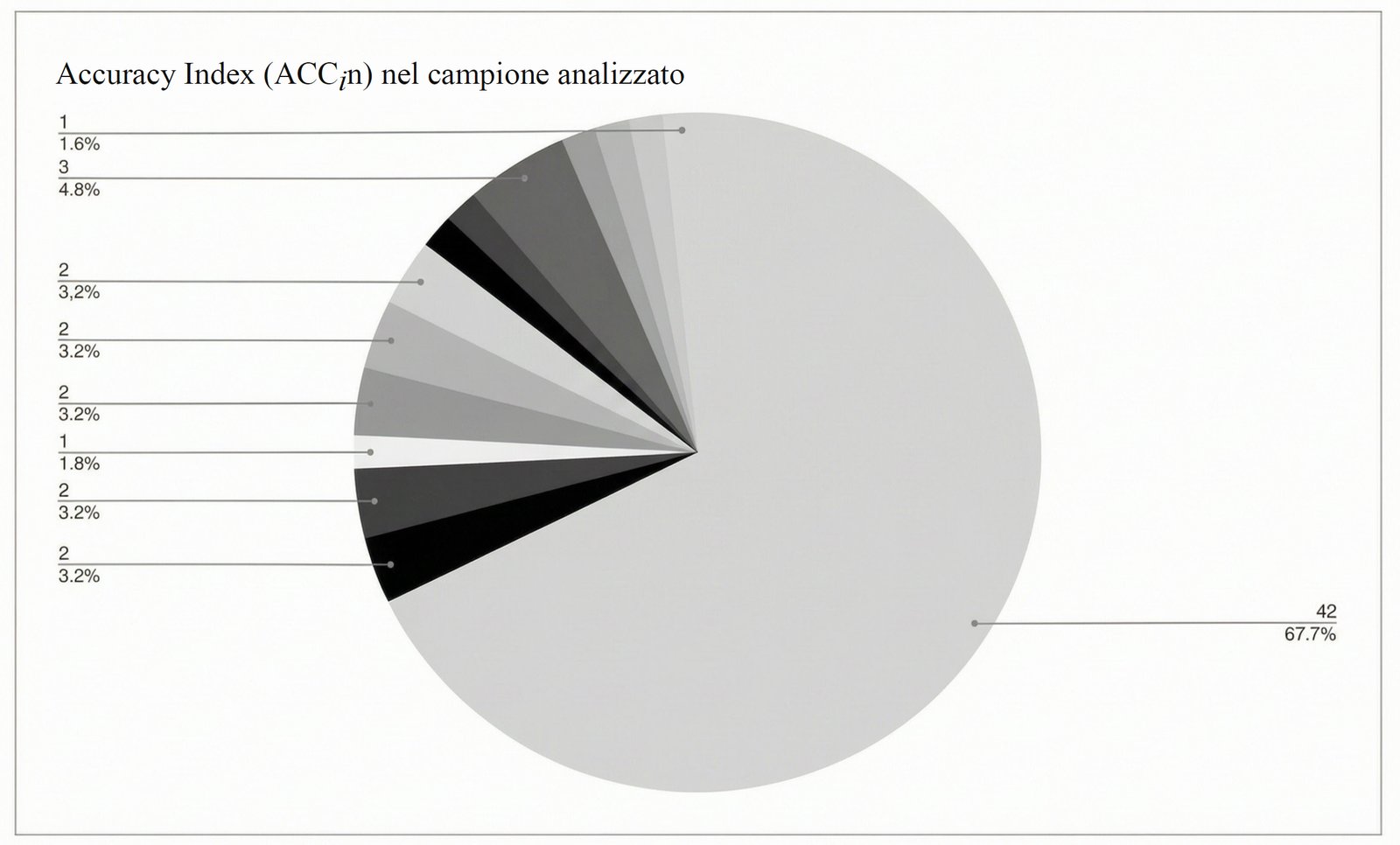
The “Accuracy of Environmental Information Index” (ACCᵢₙ) assesses the degree of specificity and verifiability of environmental information disclosed by each company in period n. The index evaluates the extent to which sustainability content is supported by measurable data, quantitative targets, or third-party certifications, distinguishing substantive communication from symbolic or generic statements. The index is calculated according to the following formula:

where:
Qᵢ,ₙ = number of accurate and verifiable information units for company i in period n
Sᵢ,ₙ = total number of sustainability information units for company i in period n
To facilitate the interpretation of the results, Fig. (3) presents the distribution of firms in the sample across the different classes of the Accuracy Index (ACC), allowing for an assessment of the level of verifiability and accuracy of the environmental information disclosed.